Low-temperature drying is a process control decision, not just a utility choice
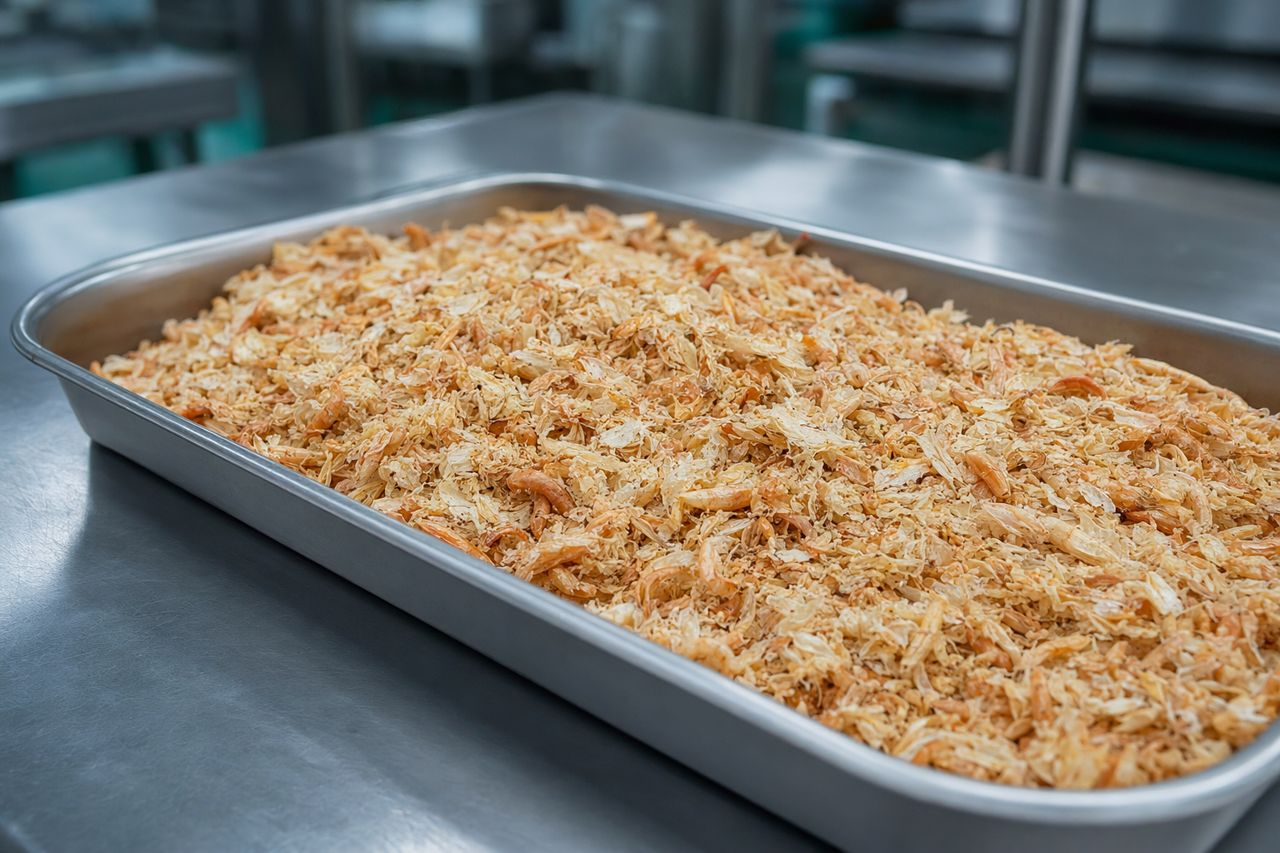
For a shrimp shell processing plant, drying affects more than moisture. It influences odor, microbial risk, storage stability, downstream deproteinization behavior, chitin color, fines generation, and the consistency of material entering extraction.
If your plant is moving toward enzyme-assisted chitin extraction, drying conditions become even more important. Overheated shell meal can carry darker color, stronger marine odor, harder-to-wet particles, and more variable protein release. A controlled low-temperature drying strategy helps keep the shell matrix more predictable before enzymatic processing.
Carapax Flow works with processors evaluating enzymes for deproteinization and chitin recovery. As an enzyme supplier for chitin extraction, we look at drying as part of the full plant sequence: receiving, washing, size reduction, drying or wet holding, enzyme contact, separation, washing, and final intermediate handling.
What low-temperature drying is trying to protect
Shrimp shell raw material is not uniform. It contains chitin, protein, minerals, pigments, residual tissue, soluble salts, and water trapped inside shell structures. Drying too aggressively can create problems that show up later in the extraction line.
Low-temperature drying is typically used to protect:
- Protein accessibility during enzymatic deproteinization
- Chitin color and visual quality before final refining
- Batch-to-batch moisture consistency for predictable dosing and conveying
- Odor control during storage and handling
- Reduced scorching and localized overheating in thin shell fractions
- Lower chemical load downstream by supporting cleaner biological protein removal
- Improved logistics when shell meal must be stored before extraction
The goal is not simply to dry fast. The goal is to dry evenly, hold quality, and deliver a stable intermediate to the next unit operation.
Common drying options for shrimp shell meal
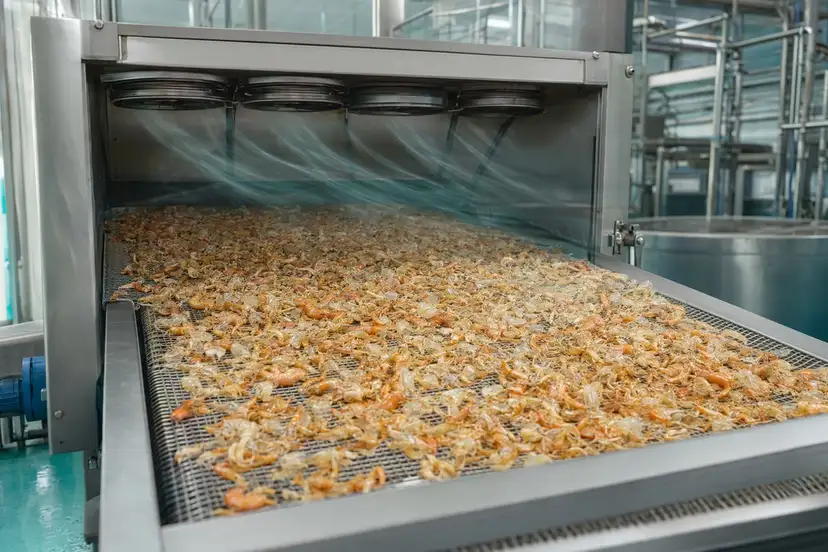
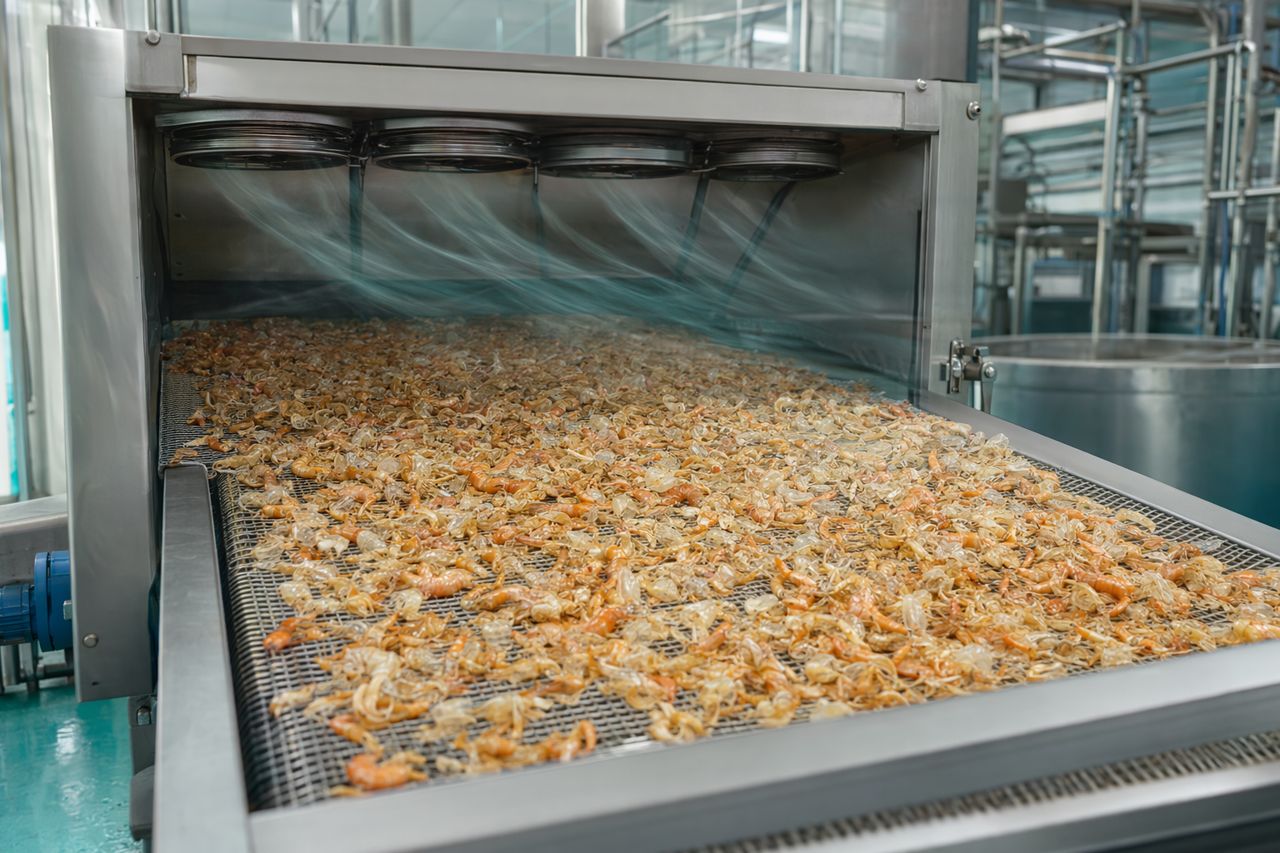
1. Belt drying with controlled air temperature
Belt dryers are a practical fit for continuous shrimp shell meal operations where residence time, bed depth, and air flow can be managed. They are useful when the plant needs a steady intermediate for extraction, packaging, or storage.
Operational advantages:
- Continuous flow suits larger shell volumes
- Bed depth can be adjusted to reduce wet pockets
- Air zones allow staged moisture removal
- Lower thermal stress than harsh direct-heat systems
- Easier integration with odor capture and exhaust treatment
Watch points:
- Uneven feed distribution can cause variable moisture
- Fine particles may migrate or create dust loading
- Sticky partially dried shell can bridge at transfer points
- Wash quality upstream strongly affects odor in the dryer exhaust
For enzyme-assisted extraction, belt drying is often preferred when the plant wants consistency without exposing shell particles to severe heat.
2. Tray or cabinet drying for smaller or specialty batches
Tray drying is slower and more manual, but it remains useful for pilot production, specialty intermediate trials, or plants validating process parameters before committing to continuous equipment.
Operational advantages:
- Simple batch segregation
- Good visibility during process development
- Lower capital complexity
- Useful for comparing pre-treatment conditions
Watch points:
- Labor-intensive loading and unloading
- Variable drying across tray positions
- Harder to scale without increasing footprint
- Risk of inconsistent moisture if loading is not standardized
Tray drying is often a development tool rather than the final answer for high-throughput shell processing.
3. Fluidized bed drying for uniform particles
Fluidized bed drying can produce efficient heat and mass transfer when particle size is controlled. It performs best when the feed is free-flowing and does not contain excessive sticky fines or large irregular shell pieces.
Operational advantages:
- Good air-to-particle contact
- Fast, even drying for prepared fractions
- Compact equipment footprint
- Potential for precise moisture endpoint control
Watch points:
- Shrimp shell fragments can vary widely in shape and density
- Fines can increase dust handling requirements
- Wet, protein-rich material may agglomerate
- Upstream milling and screening become more important
This option fits plants that already control particle size tightly and need a more uniform dried meal for downstream extraction.
4. Vacuum drying for high-value intermediates
Vacuum drying lowers the thermal burden on sensitive material and can support better color and odor outcomes. It is typically more expensive to operate and is most relevant for higher-value chitin intermediates or specialty process streams.
Operational advantages:
- Lower oxygen exposure
- Reduced thermal discoloration risk
- Better fit for sensitive intermediate quality targets
- Controlled environment for premium-grade material
Watch points:
- Higher capital and energy complexity
- Batch handling can limit throughput
- Cleaning and sanitation discipline are critical
- May not be justified for bulk shell meal
Vacuum drying is usually selected when product quality value offsets equipment and operating cost.
5. Heat pump or dehumidified-air drying
Heat pump and dehumidified-air systems can dry at lower temperatures while controlling humidity. They are attractive where energy recovery, odor containment, and stable drying conditions are priorities.
Operational advantages:
- Lower-temperature operation
- More controlled humidity profile
- Potential energy efficiency benefits
- Better containment than open-air systems
Watch points:
- Slower drying if air handling is undersized
- Salt and marine aerosols can challenge components
- Requires disciplined cleaning and corrosion-resistant design
- Best results depend on steady feed preparation
For plants seeking cleaner, controlled drying without pushing heat, this category is worth evaluating.
Why excessive heat creates downstream problems
High heat can dry shell rapidly, but rapid drying is not always compatible with extraction performance. Plant teams often see the impact later, not at the dryer.
Potential issues include:
- Darker shell meal or chitin intermediate
- Stronger residual odor after storage
- Harder particle wetting during enzyme contact
- More variable protein release from batch to batch
- Increased fines, dust, or brittle fragments
- Higher downstream washing demand
- Less predictable separation after deproteinization
In enzyme-assisted chitin extraction, the shell surface and internal protein structure need to remain accessible. Drying that locks protein residues into a less accessible state can reduce process flexibility and force compensation elsewhere in the line.
Wet processing versus drying before extraction
Not every plant should dry shrimp shell before enzymatic processing. In some cases, direct wet processing after washing and size reduction can reduce energy use and preserve accessibility.
Drying before extraction may make sense when:
- Shell supply is seasonal or discontinuous
- Raw material must be stored or transported
- The extraction plant is separate from the receiving site
- The plant needs a stable intermediate inventory
- Feeding equipment requires predictable bulk behavior
Wet processing may make sense when:
- Shells can be processed soon after receiving
- Odor control and cold-chain handling are strong
- The plant wants to avoid drying energy before deproteinization
- Enzyme contact tanks are located near washing and grinding
- Throughput is steady enough to avoid long holding times
The best answer depends on logistics, utilities, odor permits, labor, available floor space, and final chitin specification.
Practical dryer selection criteria for plant managers
When comparing drying technologies, evaluate them against operating reality, not only vendor brochures.
Feed condition
- Whole shells, crushed shells, or milled meal
- Washed versus unwashed material
- Salt load and residual tissue level
- Incoming moisture variation
- Fines content and particle size spread
Product target
- Bulk shell meal for later extraction
- Partially purified chitin intermediate
- Pale chitin flakes for further refining
- Material intended for transport or storage
- Intermediate requiring low odor and clean handling
Plant constraints
- Available floor space
- Steam, electric, or recovered heat availability
- Exhaust treatment and odor control capacity
- Cleaning access and corrosion resistance
- Dust collection requirements
- Labor model and automation level
Downstream extraction impact
- Rehydration behavior
- Protein release consistency
- Need for additional washing
- Color retention
- Separation performance
- Batch traceability
A dryer that looks efficient in isolation can become expensive if it causes odor complaints, extraction variability, or higher rework downstream.
Moisture consistency matters more than a single average number
For shell meal, the average moisture result can hide wet pockets and overdried fines. Both create operating problems.
Wet pockets can lead to:
- Odor development in storage
- Microbial risk
- Clumping in bins
- Uneven feed into extraction tanks
- Shorter usable inventory life
Overdried fines can lead to:
- Dust generation
- Handling loss
- Poor wet-out behavior
- Darker color in sensitive applications
- Higher risk of localized overheating
Consistent moisture distribution across the lot is the more useful operating target. That requires controlled feed depth, air distribution, residence time, and upstream particle preparation.
Odor control starts before the dryer
Drying does not solve poor raw material handling. It can amplify it.
For lower odor drying, plants should control:
- Time from shell separation to washing
- Residual meat and soluble protein carryover
- Brine and wash water management
- Holding temperature before drying
- Drainage before dryer feed
- Exhaust capture and treatment
- Cleaning frequency around conveyors and bins
Enzyme-assisted workflows often benefit from cleaner upstream washing because less uncontrolled protein decay reaches the dryer or extraction tank.
Integrating drying with enzymatic chitin extraction
A reliable enzyme process depends on predictable material entering the reactor. Drying should support that predictability.
A practical integration sequence may include:
- Receive shrimp shell by lot or production window
- Remove excess tissue and soluble load through controlled washing
- Reduce size to improve handling and contact area
- Dry gently when storage or transport is required
- Rehydrate consistently before enzyme contact
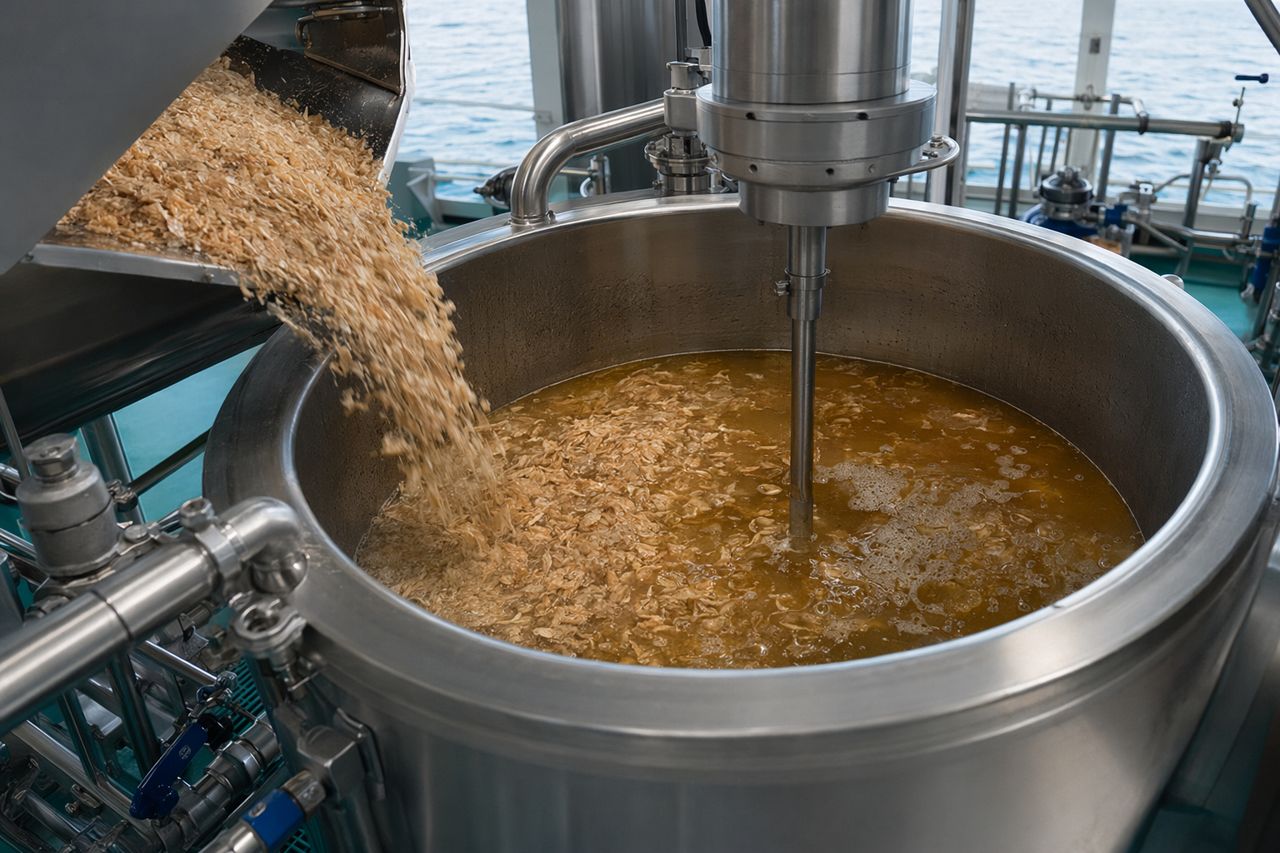
- Run enzymatic deproteinization under controlled mixing and temperature
- Separate released protein liquor from chitin-rich solids
- Wash, inspect, and condition the chitin intermediate
Carapax Flow can help evaluate where enzymes fit in this sequence and how drying choices may affect deproteinization performance, odor, and batch repeatability.
What to document during drying trials
Before investing in new dryer capacity or changing temperature strategy, run structured trials with plant-relevant measurements.
Document:
- Raw shell source and freshness
- Wash method before drying
- Particle size range
- Feed depth and loading rate
- Dryer air settings and residence time
- Moisture distribution across the lot
- Odor observations during and after storage
- Color changes after drying
- Rehydration behavior
- Downstream deproteinization consistency
- Separation and washing behavior after enzyme treatment
The most useful drying trial is linked to extraction performance, not just dryer throughput.
Where Carapax Flow fits
Carapax Flow supplies enzyme solutions for shrimp shell processing plants pursuing cleaner chitin extraction. We support plant teams that need practical deproteinization performance, lower chemical load, odor-aware processing, and repeatable batch outcomes.
We do not treat the enzyme as a standalone additive. We look at the operating context: shell freshness, washing, particle size, drying, tank mixing, separation, and final intermediate quality.
If you are comparing low-temperature drying options or trying to stabilize shell meal before enzyme-assisted extraction, we can help review the process window and quote an enzyme supply approach that fits your plant.
Request a quote
Tell us your shrimp shell source, current drying method, target chitin intermediate, and production scale. Carapax Flow will respond with a practical enzyme supply recommendation for your extraction line.
Request a quote through the on-site form