Enzyme-Assisted Versus Conventional Chitin Extraction: What Plant Managers Actually Compare
For a shrimp shell processing plant, the extraction method is not an academic choice. It affects daily throughput, chemical handling, odor pressure, wastewater load, batch color, residual protein risk, and the reliability of downstream chitin or chitosan production.
Conventional extraction is familiar. Acid and alkali stages do the heavy lifting. Operators understand the sequence, the hazards, and the correction points. But familiarity does not always mean control.
Enzyme-assisted extraction changes the comparison. Instead of relying only on aggressive chemistry to remove protein from the shell matrix, the plant introduces targeted enzymatic deproteinization to loosen protein under milder process conditions. The result is not a magic shortcut. It is a process-control tool.
Carapax Flow supplies enzyme solutions for shrimp shell processors evaluating enzyme-assisted chitin extraction against conventional practice. As an enzyme supplier for chitin extraction, we focus on what matters inside the plant: consistent protein release, manageable viscosity, stable batches, lower chemical load, and supply reliability.
The real comparison is operational, not theoretical
Plant managers usually compare extraction routes through five questions:
- Can we remove protein consistently across variable shell lots?
- Can we reduce chemical corrections without creating a slower process?
- Can we control odor earlier in wet shell handling and reaction areas?
- Can we protect chitin quality while keeping throughput practical?
- Can the supplier support trials, scale-up, and repeat delivery without disruption?
That is the useful frame. Enzyme-assisted extraction should be evaluated as a production decision, not a laboratory curiosity.
Conventional chitin extraction: proven, but correction-heavy
Conventional shrimp shell chitin extraction typically depends on chemical demineralization and deproteinization. The route is widely used because it is direct, robust, and easy to understand at plant scale.
Where conventional processing performs well
- Uses established equipment and known operating routines
- Handles mixed raw material lots with strong chemical force
- Fits plants that already have chemical storage, dosing, and neutralization capacity
- Can be straightforward for operators trained on acid and alkali stages
Where conventional processing creates pressure
- High chemical load can increase handling risk and wastewater burden
- Over-correction may affect final chitin color, texture, and consistency
- Variable shell lots can require operator intervention from batch to batch
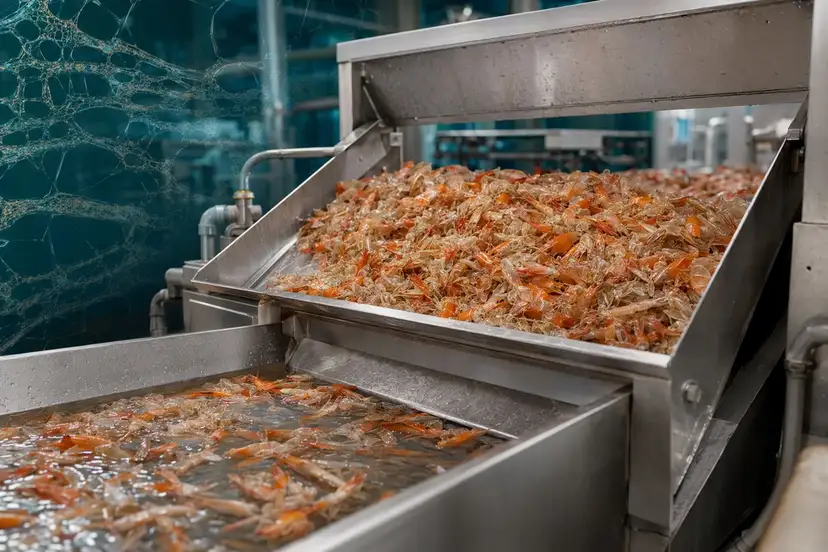
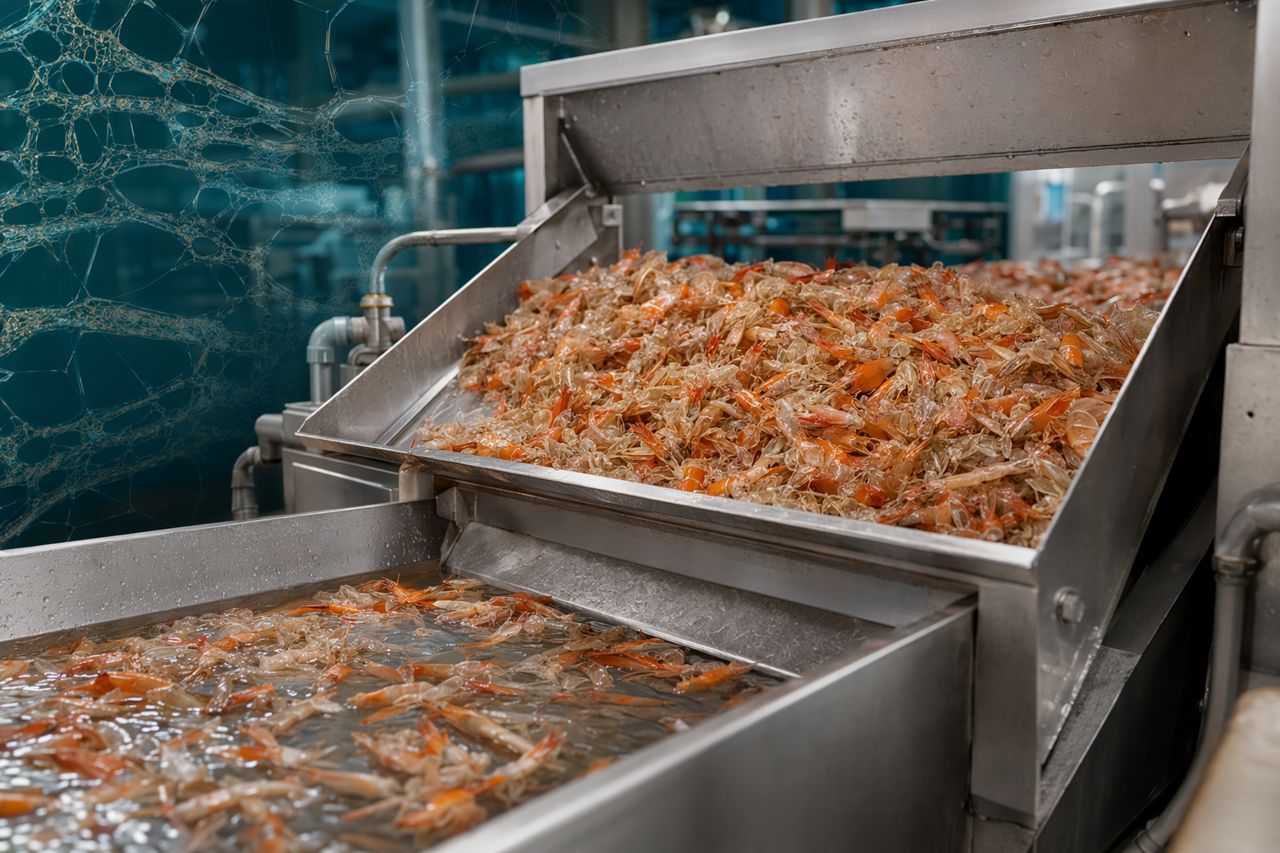
- Odor pressure can build during wet shell holding and early processing
- Strong conditions can make the process less forgiving when raw material quality changes
Conventional extraction is not automatically inefficient. Many plants run it well. But it often relies on chemical intensity to overcome biological variability in shrimp shell feedstock.
Enzyme-assisted extraction: targeted deproteinization before the harshest corrections
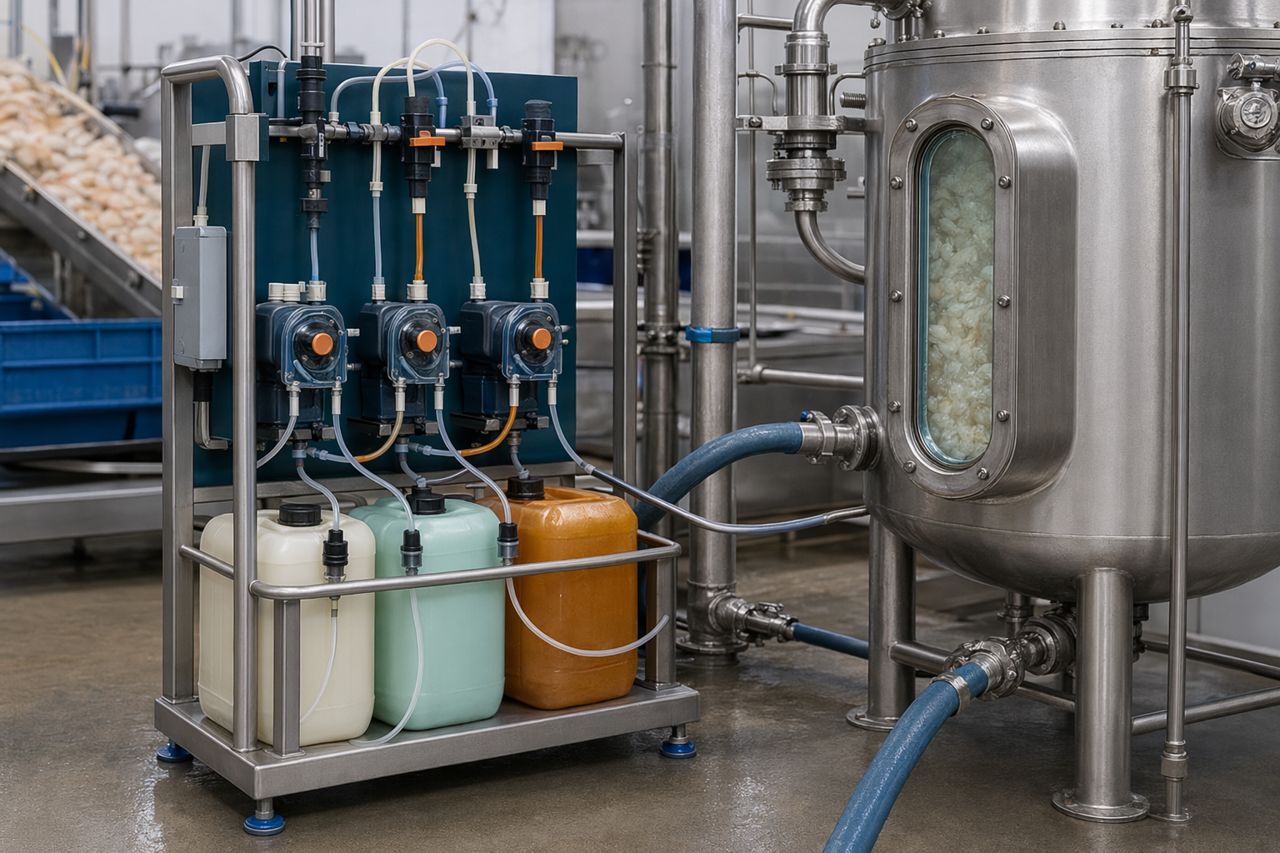
Enzyme-assisted chitin extraction uses enzymes, commonly protease-led formulations, to help release protein from shrimp shell material. The objective is practical: loosen and solubilize protein so the plant can reach deproteinization targets with a more controlled chemical profile.
This can be applied as a dedicated enzymatic deproteinization stage or as part of a hybrid sequence where enzymes reduce the burden on downstream chemical steps.
What enzyme-assisted processing can improve
- Deproteinization control: Better protein release from the shell matrix before final washing or polishing stages
- Batch consistency: Less dependence on aggressive correction when shell quality varies
- Odor management: Earlier protein breakdown and controlled wet processing can reduce odor pressure in key areas
- Lower chemical load: Enzymes can reduce the need for heavy alkali correction in suitable process designs
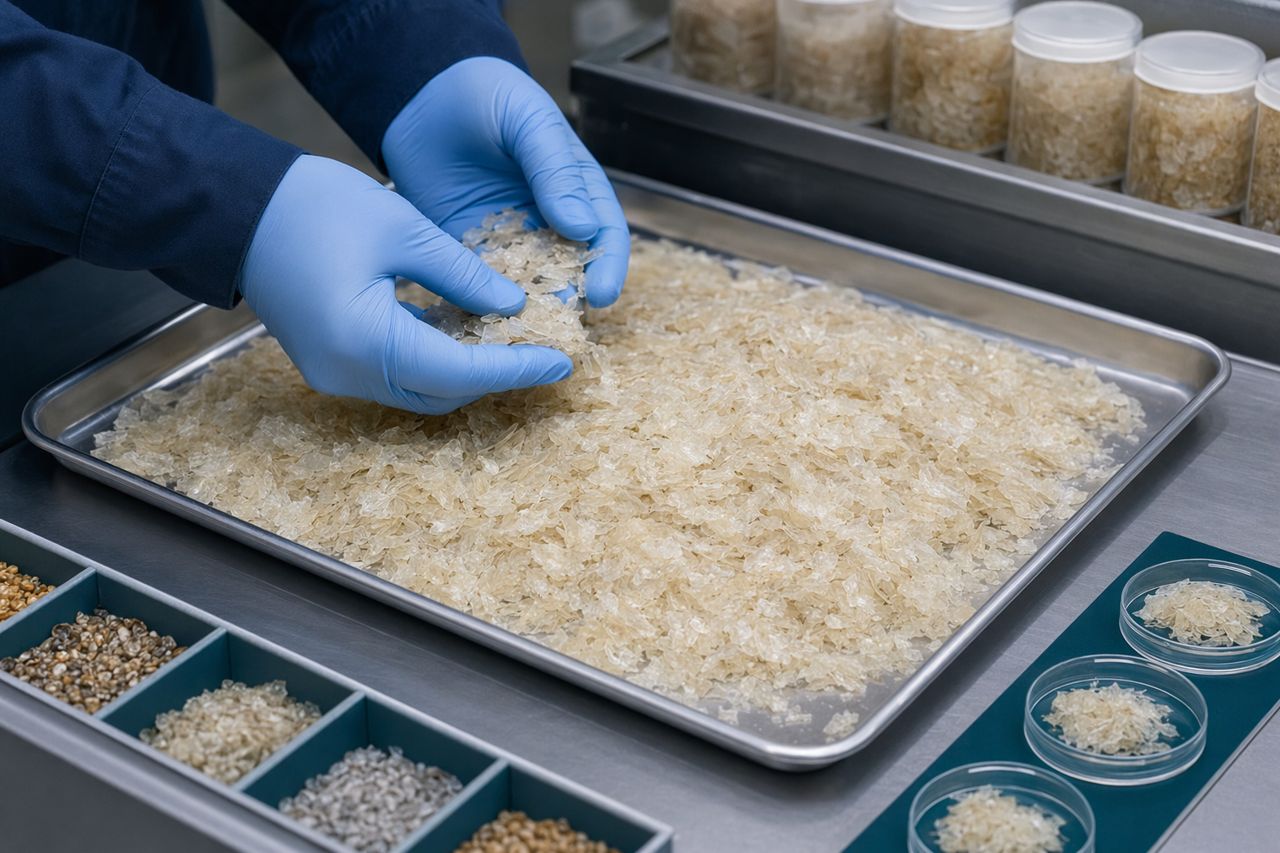
- Chitin quality control: Milder protein release can help protect flake appearance and texture
- Waste stream management: Lower chemical intensity can support more manageable downstream treatment
The point is not to replace every existing step overnight. The point is to identify where enzymes create measurable plant value without disrupting the line.
The main trade-offs plant managers should expect
Enzyme-assisted extraction adds a biological process step. That step must be controlled. Plants need to evaluate timing, mixing, temperature window, solids handling, separation, and cleaning routines.
Enzyme-assisted extraction can add value when:
- Raw shell lots vary in protein content, freshness, or handling history
- Chemical cost, safety, or wastewater capacity is under pressure
- Odor complaints or internal odor controls are becoming operational issues
- Final chitin consistency is important for downstream customers
- The plant wants a more controlled deproteinization stage before stronger chemistry
Conventional extraction may remain the better fit when:
- Existing chemical infrastructure has low cost and high capacity
- Product requirements are broad and do not reward tighter batch consistency
- Process time is fixed and no additional controlled reaction window is available
- The plant cannot yet support enzyme storage, dosing discipline, or trial monitoring
A good supplier should be direct about these limits. Enzyme-assisted processing should fit your plant, not force your plant to fit a brochure.
What to measure during a plant trial
A useful enzyme trial should be built around production metrics, not just bench results.
Track the plant-level signals
- Protein release behavior during the enzymatic stage
- Ease of separation and washing after treatment
- Odor intensity around wet shell handling and reaction tanks
- Chemical correction needed after enzyme treatment
- Batch color and flake texture after extraction
- Tank cleanability and residue behavior
- Operator handling time and process complexity
- Repeatability across multiple shell lots
The best trials compare enzyme-assisted processing against your current baseline under realistic plant constraints. That means the same raw material realities, the same equipment limits, and the same throughput expectations.
Supplier reliability matters as much as formulation
For shrimp shell processors, enzyme supply is not just a purchase order. It is part of production continuity.
When selecting an enzyme supplier for chitin extraction, evaluate:
- Ability to recommend a process-fit formulation for shrimp shell material
- Support for pilot and production-scale trials
- Consistent batch supply and lead-time communication
- Practical guidance on storage, dosing workflow, and mixing sequence
- Clear documentation for procurement and plant teams
- Willingness to work within your existing equipment and operating constraints
Carapax Flow works with processors who need enzyme solutions that can be trialed, scaled, and supplied with operational discipline.
Bottom line: compare by plant impact
The strongest case for enzyme-assisted chitin extraction is not that it sounds cleaner. It is that it can give plant managers another control point: targeted deproteinization before the process leans heavily on chemical correction.
For the right shrimp shell processing plant, that can mean steadier batches, lower chemical pressure, better odor control, and more predictable chitin quality. For other plants, conventional extraction may remain the most practical route until wastewater, odor, consistency, or customer specifications change.
The right answer is process-specific.
Request a quote for your extraction line
If you are comparing enzyme-assisted and conventional chitin extraction, Carapax Flow can help assess the fit for your raw material, tanks, mixing setup, separation steps, and production goals.
Request a quote through the on-site form and share your current process outline, shell source, target product, and the main constraint you want to improve.