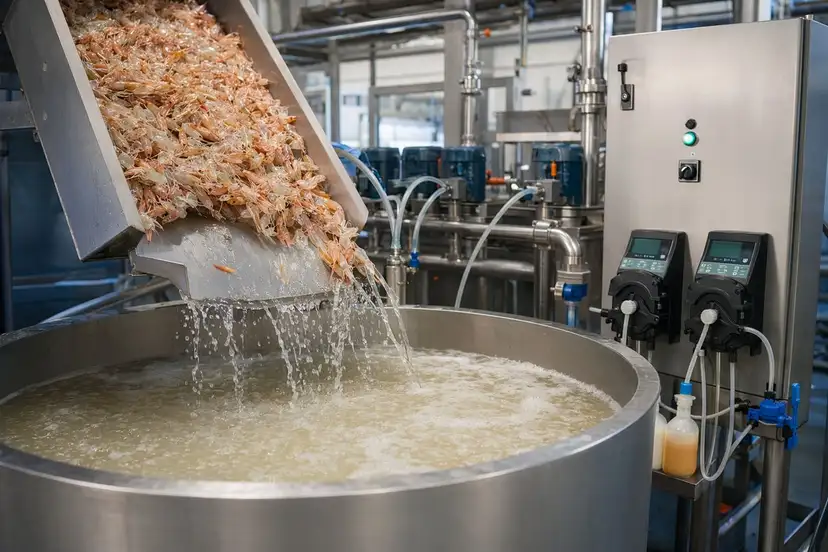
Protein Hydrolysate From Shrimp Shell Side Streams
Operational guidance for shrimp shell processors evaluating enzymatic deproteinization, chitin extraction, odor control, and protein hydrolysate value from side streams.
Request pricing Operational guidance for shrimp shell processors evaluating enzymatic deproteinization, chitin extraction, odor control, and protein hydrolysate value from side streams.
Request pricingShrimp shell processing plants are under pressure to recover more value from every tonne of incoming shell. Chitin remains the anchor product, but the protein fraction removed during deproteinization can also become a practical revenue stream when the process is controlled.
For plants evaluating an enzyme supplier for chitin extraction, the question is no longer only “Can we remove protein?” The stronger question is: “Can we remove protein consistently while preserving chitin quality, reducing chemical load, controlling odor, and generating a hydrolysate stream with usable downstream potential?”
Carapax Flow supplies enzyme solutions for shrimp shell processors that need operational reliability, not lab-stage complexity.
Traditional shell processing often treats protein removal as a disposal problem. Strong alkaline treatment can separate protein quickly, but it may also create a harsher wastewater burden, reduce flexibility in downstream valorization, and make the protein fraction less attractive for further use.
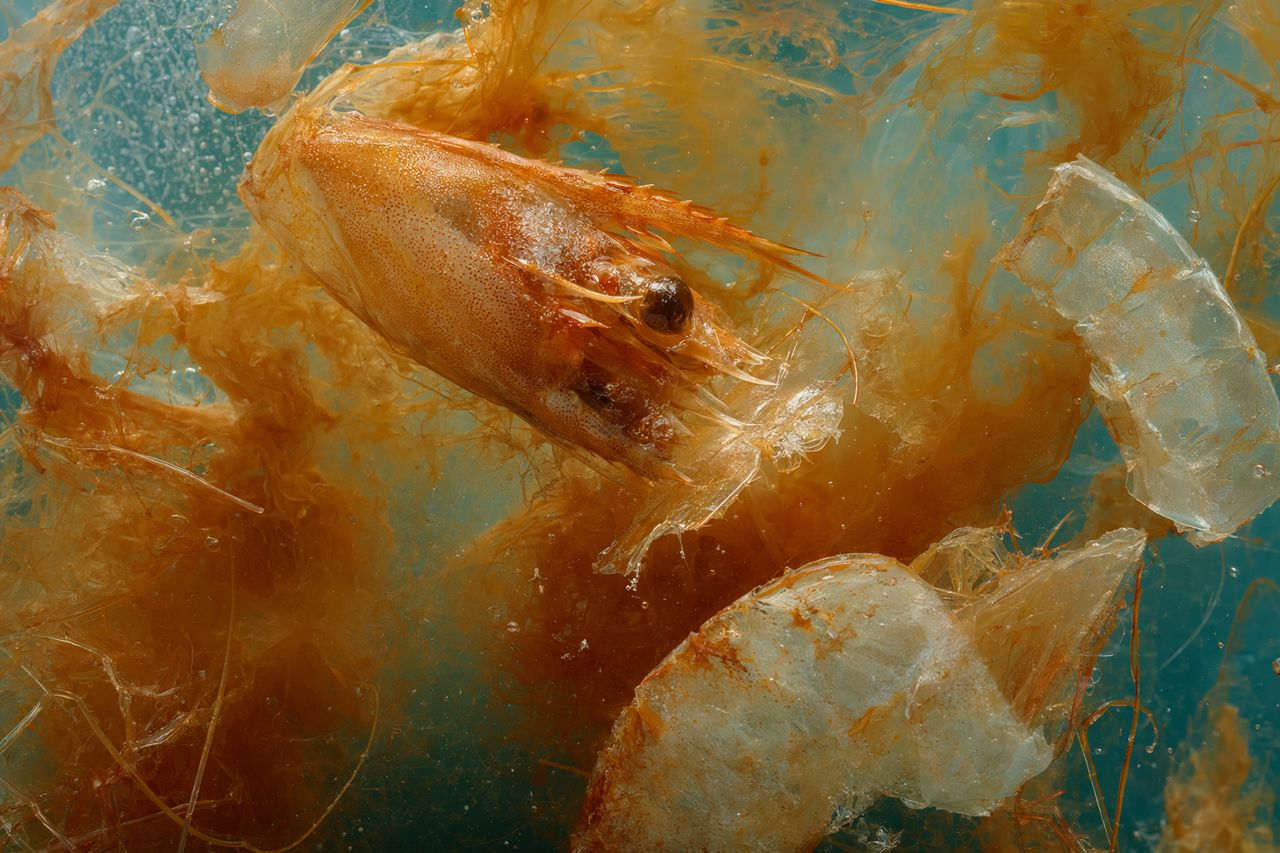
Enzymatic deproteinization changes the operating logic. Instead of destroying protein functionality through aggressive chemistry, the plant can release protein into a liquid hydrolysate stream under more controlled conditions.
That stream may support opportunities in areas such as:
The exact commercial route depends on local regulations, raw material quality, stabilization, concentration, and customer specifications. But the first step is always the same: release the protein fraction in a repeatable and manageable way.
A shrimp shell plant cannot pursue hydrolysate value at the expense of chitin performance. The deproteinization step must support both sides of the process.
A well-designed enzyme program can help plants improve:
The goal is not to complicate the plant. The goal is to make the shell stream work harder.
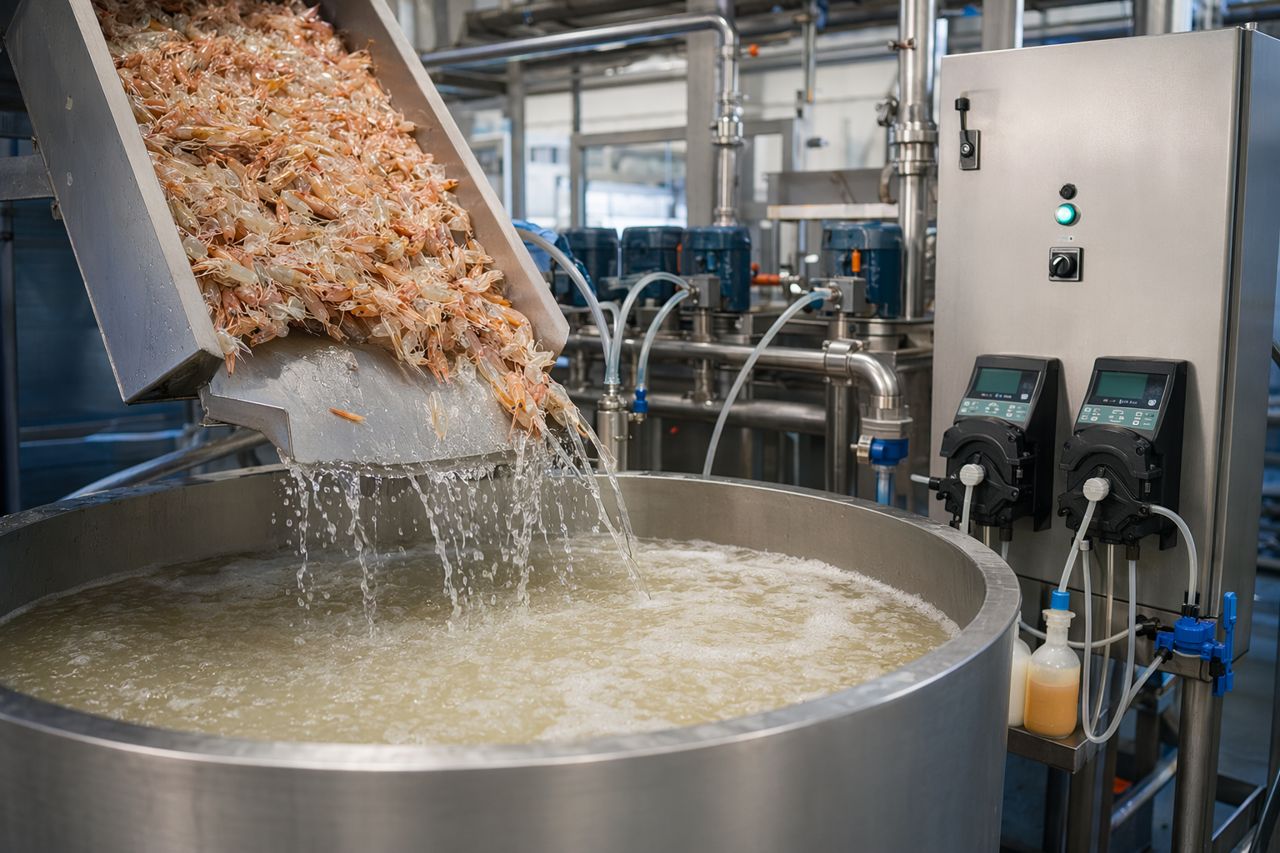
In a typical shrimp shell processing plant, enzymatic treatment is positioned after initial washing and size reduction, and before or alongside downstream mineral management depending on the plant’s process design.
Carapax Flow supports enzyme selection and integration around practical plant variables:
This is where supplier reliability matters. A processor does not need a generic enzyme label. It needs a deproteinization solution matched to real shell variability, plant equipment, and production priorities.
Protein hydrolysate opportunity is created upstream. If the deproteinization step is unstable, the hydrolysate stream will also be unstable.
Plants should evaluate the hydrolysate stream for:
Not every plant needs to build a finished hydrolysate product immediately. Some begin by improving separation, reducing disposal load, and collecting data on the protein liquor. That is often the most realistic path: stabilize the process first, then qualify the opportunity.
Chemical deproteinization can be effective, but it often narrows downstream choices. Enzymatic processing can reduce the severity of the protein removal step, giving the plant more options for both chitin and side-stream management.
Potential operational advantages include:
For plants facing rising chemical, effluent, or disposal costs, these advantages can directly affect operating economics.
Before changing a production process, plant managers need proof under relevant conditions. A useful supplier conversation should focus on plant-specific performance, not generic enzyme claims.
Key questions include:
Carapax Flow works with processors to define these questions before trial design, so the evaluation produces decision-ready operating data.
Protein hydrolysate is not created at the end of the line. It is created when the protein is released from the shell matrix cleanly, consistently, and under conditions that keep downstream options open.
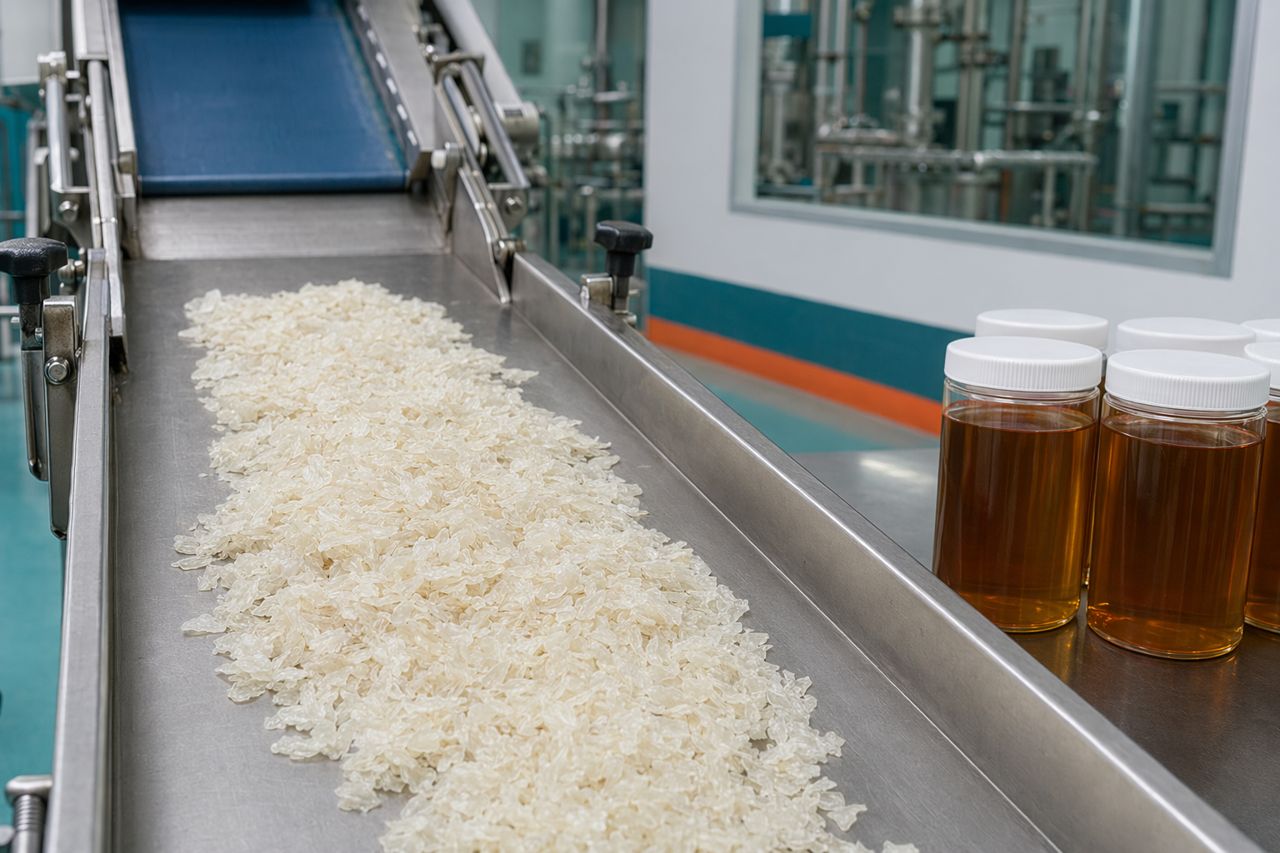
For shrimp shell processors, enzymatic deproteinization can support a stronger total recovery model:
That combination is where the commercial value sits.
Carapax Flow supplies enzyme solutions for shrimp shell processing plants focused on chitin extraction, deproteinization performance, and side-stream value recovery. If your plant is reviewing chemical use, chitin yield, hydrolysate options, or batch consistency, our team can help evaluate the process fit.
Request a quote using the on-site form and tell us about your shell source, current process flow, production priorities, and target product specifications.
Tell us your application and volume — we reply with pricing and lead time.
We have received your message. We will reply by email.