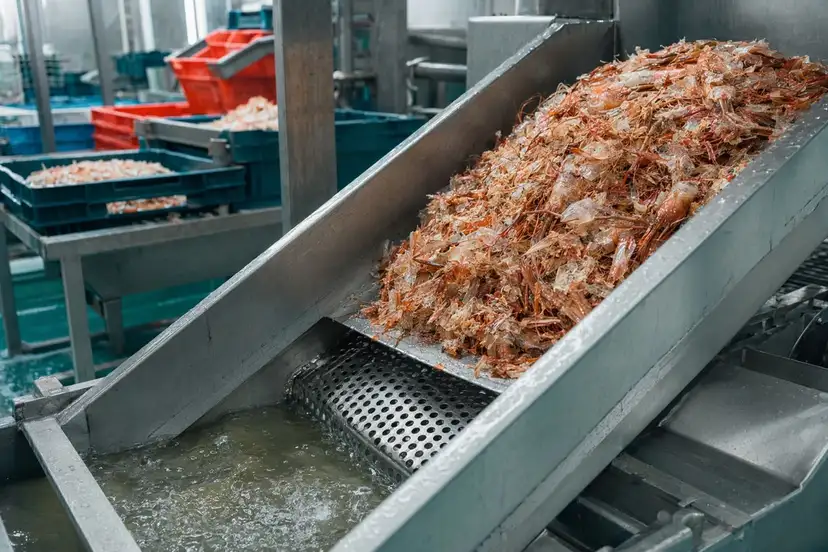
Shrimp Shell Storage, Odor & Spoilage | Carapax Flow
Storage time changes odor, spoilage risk, and deproteinization consistency in shrimp shell processing. Learn how shell handling affects chitin extraction and enzyme performance.
Request pricing Storage time changes odor, spoilage risk, and deproteinization consistency in shrimp shell processing. Learn how shell handling affects chitin extraction and enzyme performance.
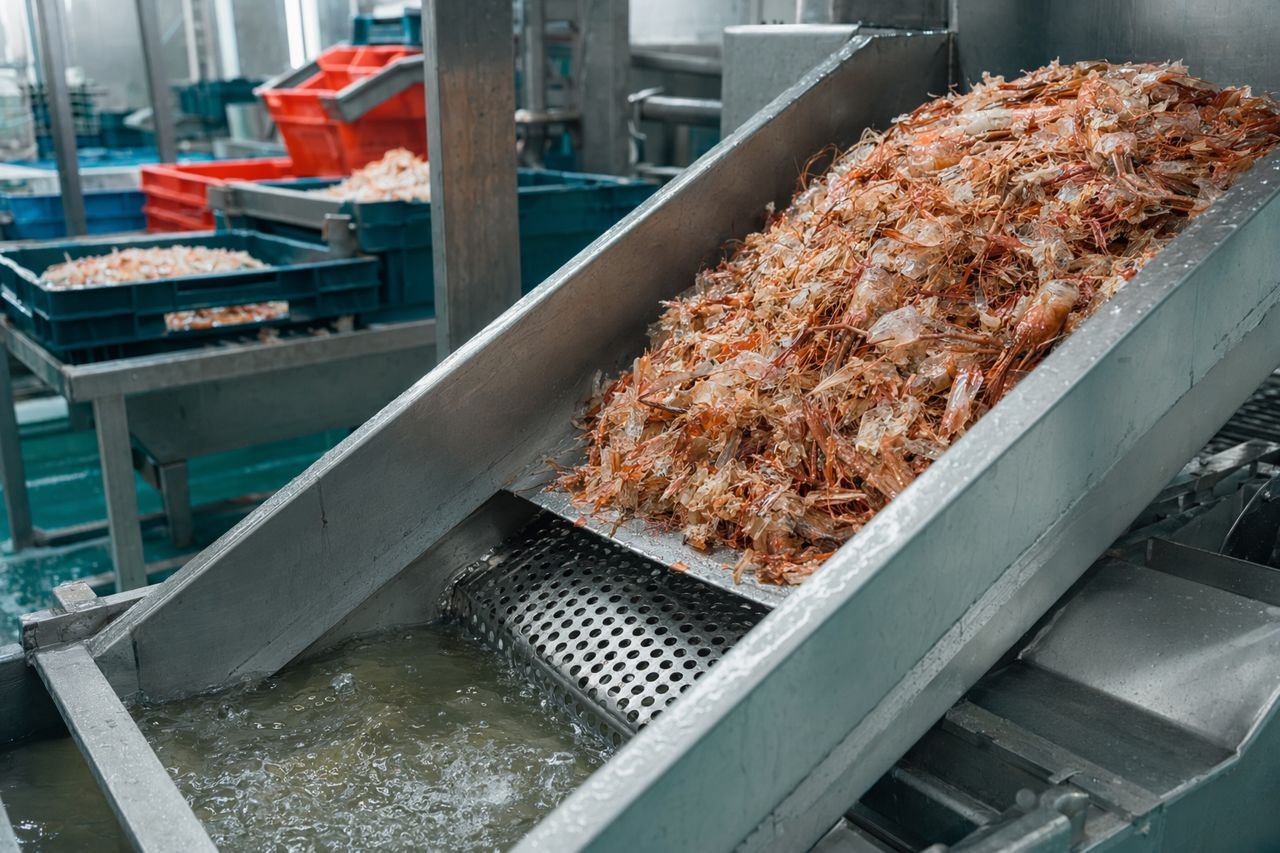
Request pricingShrimp shell is not a passive raw material. Once peeling stops, every hour of holding changes the shell stream: residual meat softens, brine concentrates, odor compounds rise, and microbial activity starts moving the batch away from predictable extraction behavior.
For a shrimp shell processing plant, those changes do not stay in the receiving area. They show up later as inconsistent deproteinization, higher wash demand, more chemical correction, variable chitin color, and production decisions made under odor pressure.
Carapax Flow works with processors that need enzyme systems matched to real plant conditions, not ideal lab feedstock. Storage time is one of the first variables to control.
Fresh shrimp shell carries a mix of shell mineral, chitin, protein, pigment, lipids, water, salt, and residual flesh. That mix is useful feedstock, but it is also biologically active.
As holding time increases, plants often see:
The issue is not only spoilage. The bigger operational issue is variability. A chitin extraction line can handle a defined raw material. It struggles when every bin behaves differently.
Odor complaints are often treated as housekeeping problems. In shrimp shell processing, odor is also a process signal.
A rising odor profile can indicate that residual meat, soluble proteins, and brine are changing faster than the extraction plan assumes. If the plant responds only by adding stronger chemicals or longer washing, the line may still produce chitin, but at a higher cost and with less batch control.
Odor pressure can also drive poor decisions:
A more stable approach starts earlier: receive, drain, rinse, hold, and dose according to feedstock condition.
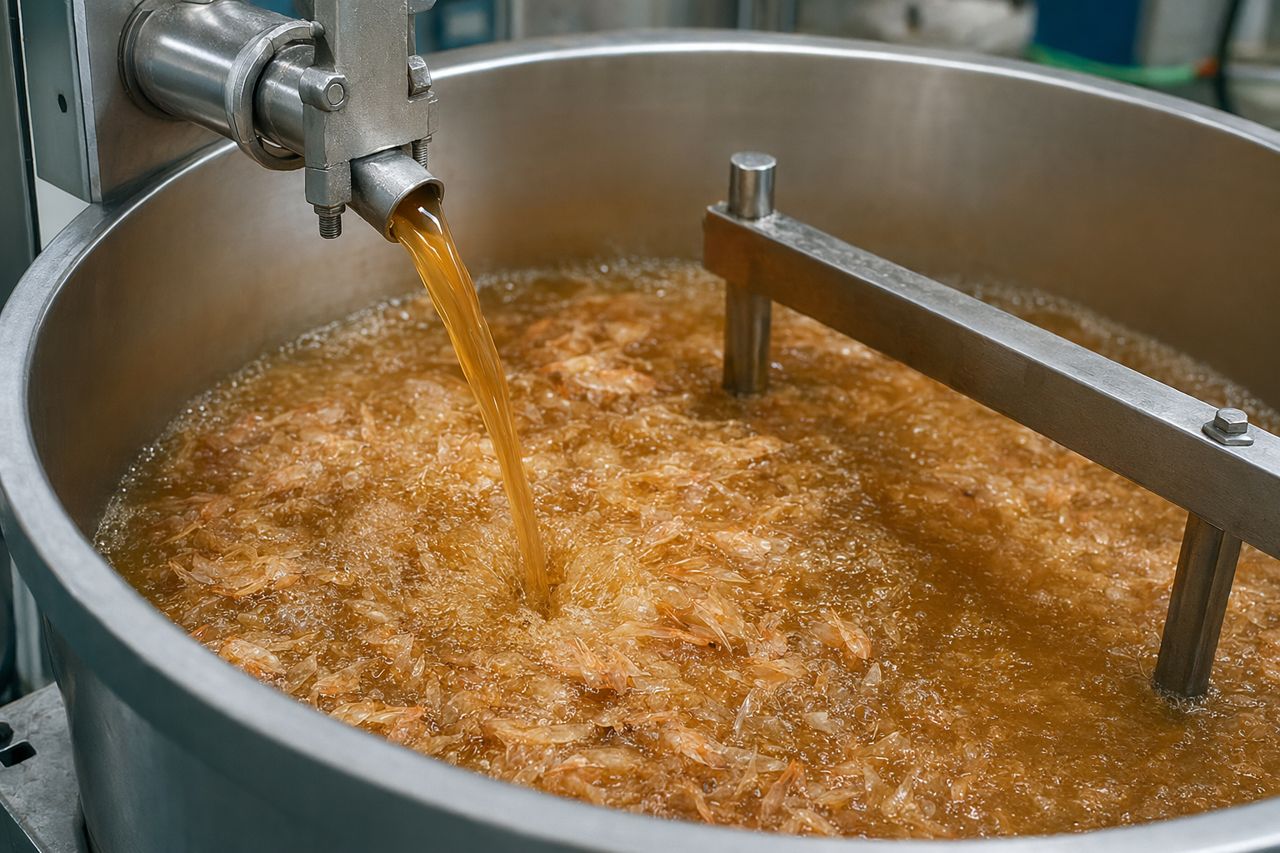
Enzymes can help release protein under milder process conditions, but they are not a reset button for poorly controlled raw material. Shell age, salt carryover, particle size, residual flesh load, temperature history, and liquor composition all affect how the enzyme system performs in the tank.
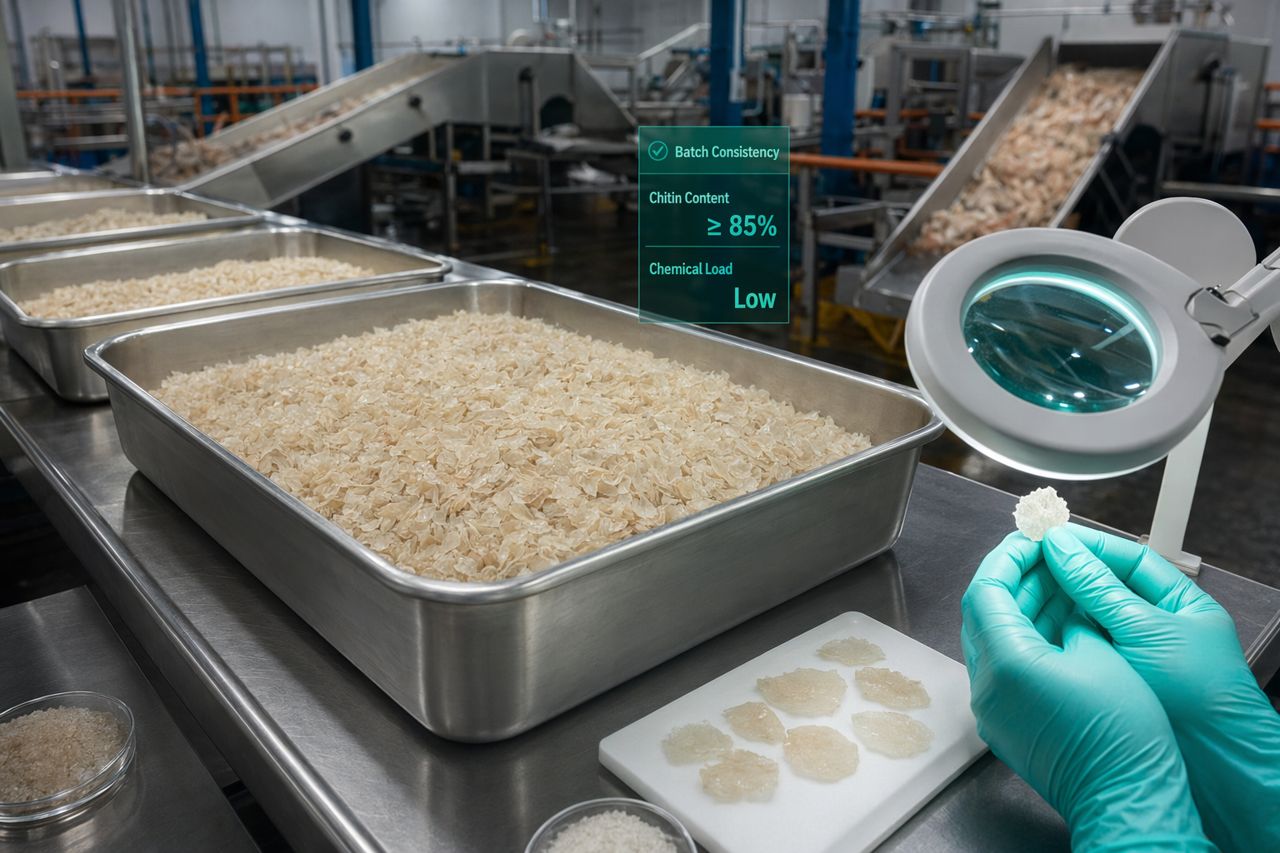
When shell is handled consistently, enzymatic deproteinization can support:
When shell age is uncontrolled, the same enzyme dose strategy may produce different outcomes from one batch to the next. That is why Carapax Flow evaluates the shell stream as an operating system, not just as a raw material input.
Most plants already know when shell is old. Fewer plants capture the details in a way that helps extraction decisions.
The most important timestamp is not when the shell arrives at the chitin line. It is when the shell left the peeling operation. If two bins arrive together but were generated at different times, they should not automatically be treated as equal feedstock.
Standing brine accelerates odor formation and dilutes process control. Drained shell is easier to dose, easier to mix, and less likely to create unexpected liquor volume in the extraction tank.
Shell with heavy meat carryover can require more deproteinization capacity and creates more odor load. It also changes the solids-to-liquor relationship inside the reactor.
Warm, stagnant holding conditions increase spoilage pressure. Covered bins may reduce immediate odor release, but they can also trap heat and moisture if storage discipline is weak.
If shell comes from multiple peeling lines, suppliers, or shifts, mixing can hide the cause of batch variation. Segregation gives the plant better troubleshooting data.
The best enzyme program performs better when upstream handling is disciplined. For shrimp shell processors, practical improvements often include:
These are not cosmetic changes. They protect yield, tank scheduling, wash water balance, and final chitin consistency.
A reliable enzyme supplier for chitin extraction should do more than ship material. The supplier should help translate raw shell variability into operating decisions.
Carapax Flow supports processors by focusing on:
The right enzyme approach is not chosen in isolation. It is matched to the plant’s raw material reality.
Many shrimp shell plants cannot fully control the age or condition of incoming material. Seasonal landings, peeling schedules, transport time, and supplier behavior all create variation.
The goal is not perfection. The goal is to build a process that knows what it is receiving and reacts consistently.
A practical decision framework looks like this:
This turns storage time from a hidden problem into a manageable production variable.
Odor and spoilage are not separate from extraction economics. They influence chemical demand, labor pressure, wastewater load, batch timing, and chitin quality. If those variables are ignored, the plant pays for them later in the process.
Carapax Flow helps shrimp shell processors evaluate enzyme solutions against real operating constraints: variable shell age, salt carryover, residual flesh, tank configuration, temperature profile, and throughput targets.
If your plant is trying to reduce chemical load, improve deproteinization consistency, or stabilize chitin quality from a changing shell stream, the first step is to define the feedstock problem clearly.
Use the on-site request a quote form to tell us about your shrimp shell source, storage time, deproteinization target, and current process constraints. Carapax Flow will review the operating context and recommend an enzyme supply approach built for your plant.
Tell us your application and volume — we reply with pricing and lead time.
We have received your message. We will reply by email.