From Shrimp Processor to Chitin Factory: Designing a Reliable Shell Supply Chain
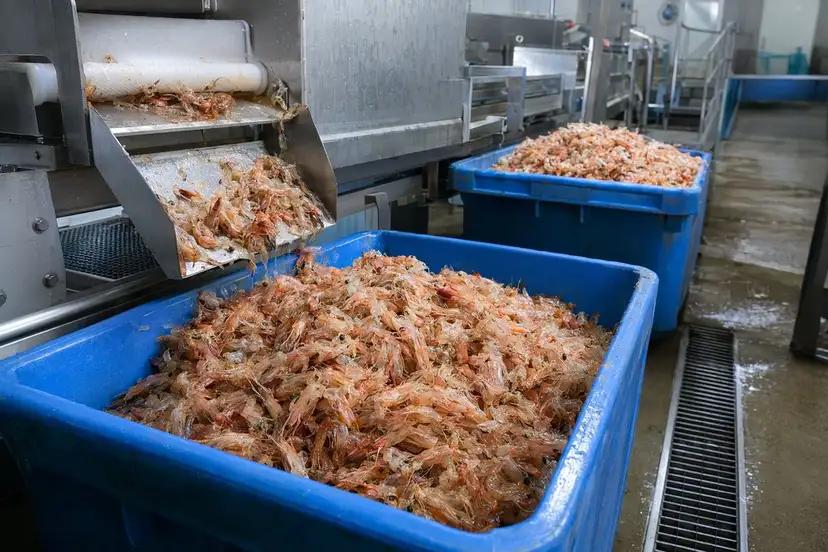
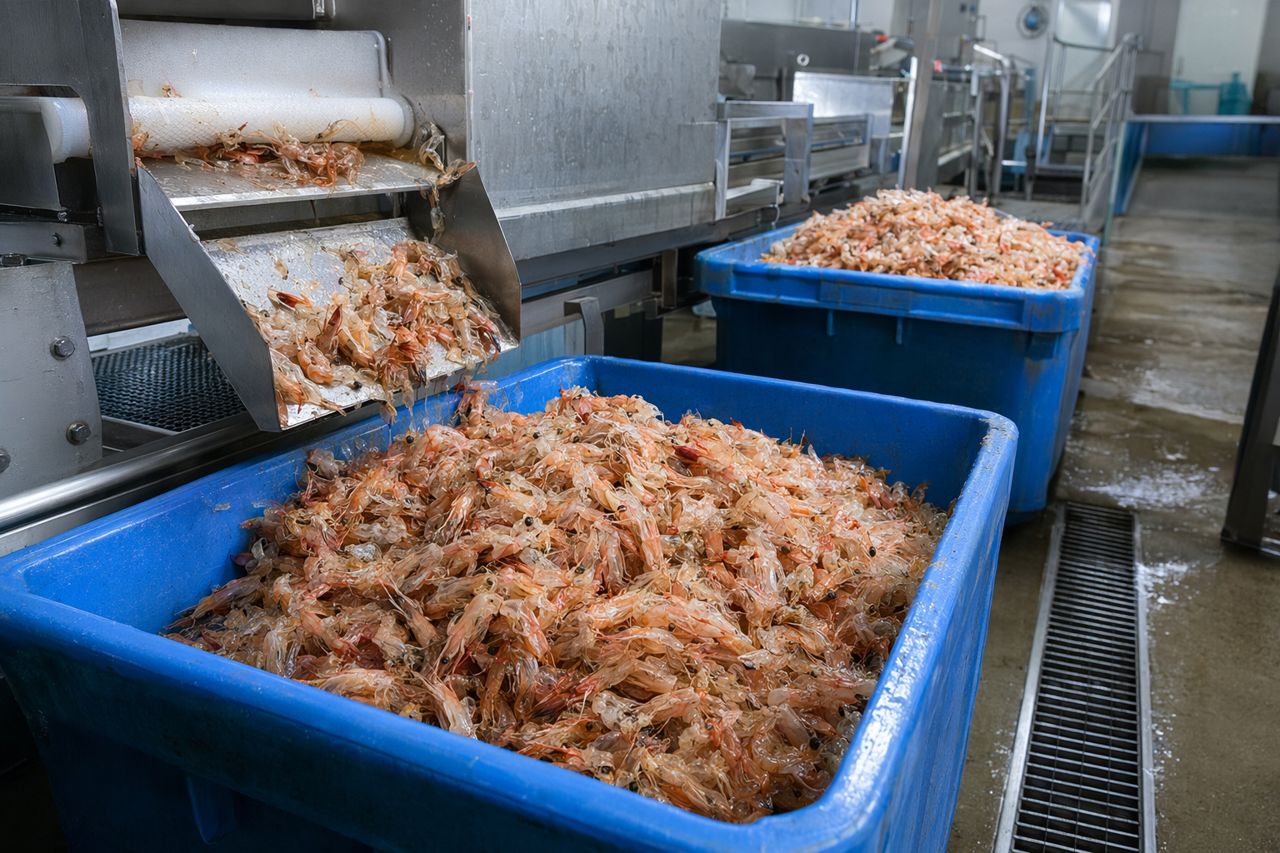
A chitin plant does not start at the reactor. It starts at the shrimp peeling line.
For processors converting shrimp shells into chitin, the biggest operational variable is often not the enzyme tank, the washer, or the dryer. It is the shell supply chain: how fast shells are collected, how they are stabilized, how they are transported, and how consistently they arrive at the extraction site.
If the shells are warm, mixed with excess meat, delayed in open bins, or exposed to inconsistent salt and moisture conditions, the downstream process has to compensate. That usually means stronger odor, wider batch variation, higher chemical load, more wastewater burden, and lower confidence in final chitin quality.
Carapax Flow works with shrimp shell processing plants that need a dependable enzyme supplier for chitin extraction and a process partner that understands the feedstock reality behind the plant gate.
Why shell supply chain design matters
Shrimp shells are not an inert mineral stream. They are a fast-changing marine biomass containing chitin, protein, minerals, pigments, lipids, residual tissue, and moisture. Once separated from the edible product, the material begins to change quickly.
For chitin production, those changes matter because they affect:
- Deproteinization performance in enzymatic or hybrid processes
- Odor formation during holding, transport, and pretreatment
- Batch-to-batch consistency in protein load and mineral balance
- Rinse demand after processing
- Yield predictability from incoming shell mass
- Final chitin color and cleanliness
- Plant scheduling, especially when shell arrivals are seasonal or uneven
A reliable chitin operation treats shell logistics as a controlled production input, not as a waste collection problem.
The processor-to-chitin link: where value is won or lost
In many plants, shrimp shells are handled as a by-product until someone decides to extract value from them. That mindset creates gaps.
Shell bins may sit too long. Drainage may be poor. Heads, shells, tails, and residual flesh may be mixed differently from shift to shift. Incoming loads may vary in salinity, temperature, and particle size. The chitin line then receives a moving target.
The better approach is to define the shell stream as a specification.
A practical incoming shell specification should include:
- Maximum holding time before stabilization or processing
- Preferred temperature range during staging and transport
- Drainage expectations to reduce free liquid and odor risk
- Separation targets for shells, heads, tails, and soft tissue carryover
- Foreign material control, including plastic, gloves, labels, and packaging fragments
- Accepted moisture range or dewatering practice
- Lot identity by processor, species mix, date, and shift
- Clear rejection or downgrade rules for spoiled, overheated, or contaminated loads
This does not need to be complicated. It needs to be repeatable.
Freshness is a process variable
Fresh shell material generally supports cleaner extraction. Delayed shell material brings a different operating profile: more odor, more soluble breakdown products, less predictable protein release, and greater need for corrective handling.
For enzyme-assisted chitin extraction, freshness affects how consistently the process can remove protein without forcing the plant into harsh chemical correction. Enzymes can help reduce chemical load and support controlled deproteinization, but they are not a substitute for poor feedstock discipline.
The best plants protect the enzyme step by protecting the shell stream before the shells enter the tank.
Logistics models for shrimp shell supply
There is no single correct logistics model. The right design depends on distance, daily shell volume, seasonality, local climate, plant layout, and available cold chain.
1. Co-located processing and extraction
This is the strongest model when available. Shells move directly from shrimp processing into stabilization, size reduction, or extraction.
Operational advantages:
- Shortest time from peeling to processing
- Lower odor risk
- Better lot traceability
- Reduced transport cost and leakage issues
- Easier coordination between shell output and reactor scheduling
Main challenge: The chitin line must be designed around the processor’s production rhythm, including peak landings and cleaning windows.
2. Regional shell aggregation
Multiple shrimp processors send shell streams to one chitin facility. This model can support larger extraction capacity but requires tighter receiving control.
Operational advantages:
- Better feedstock volume security
- Less dependence on a single processor
- Larger batch planning flexibility
Main challenge: Variation increases. The plant must manage species mix, holding time, transport condition, and processor-specific handling practices.
3. Stabilized shell supply
Shells are preserved before transport or before extraction. Stabilization can involve chilling, freezing, salting, acidification, drying, or other site-specific methods.
Operational advantages:
- Better control across longer distances
- Lower spoilage risk
- Improved seasonal buffering
Main challenge: Stabilization affects downstream washing, salt balance, moisture, cost, and equipment loading. The choice must be made with the extraction process in mind.
Designing for enzyme-assisted chitin extraction
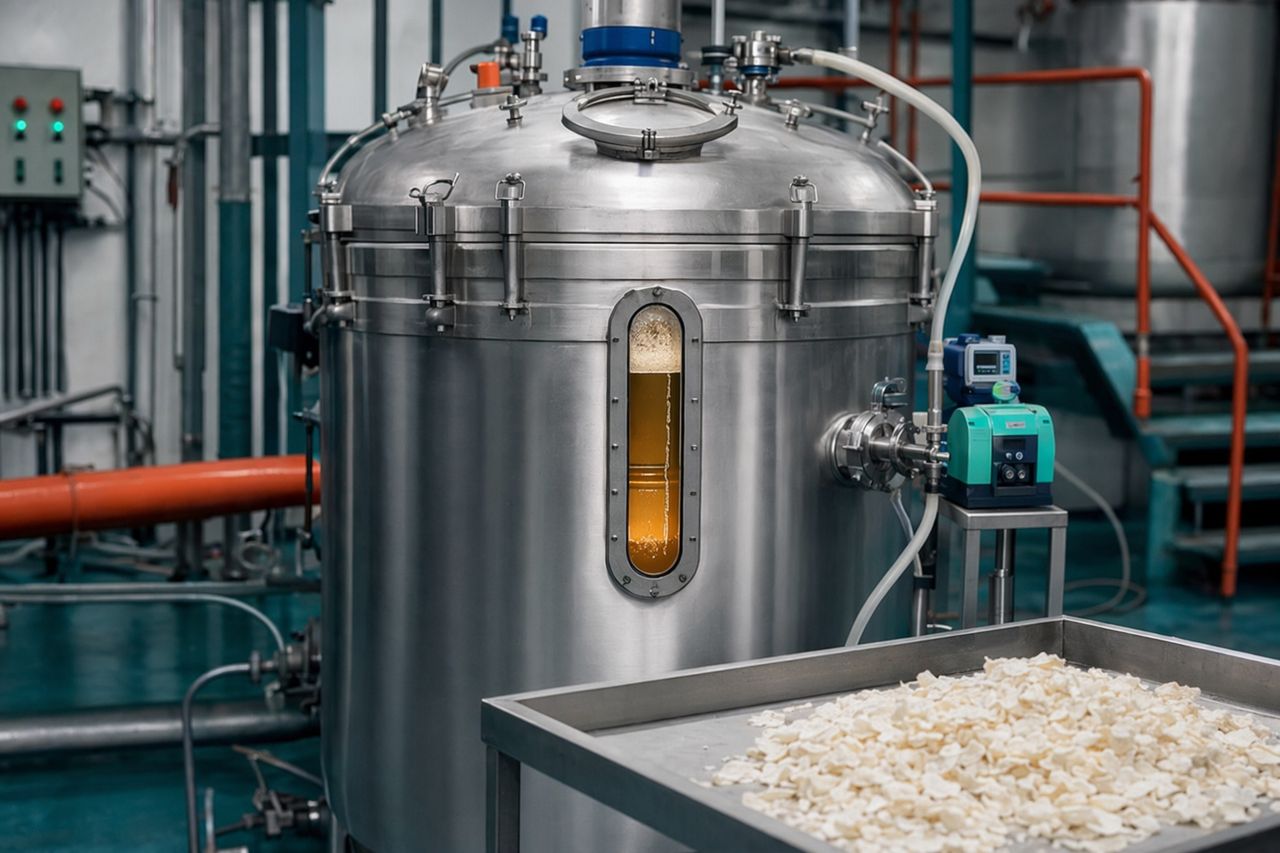
Enzyme-assisted extraction depends on controlled contact between shell particles, water, enzyme formulation, and process conditions. Feedstock variability can affect mixing, protein release, filtration, and rinse demand.
A strong shell supply chain supports enzyme performance by controlling:
- Particle size before dosing
- Excess tissue load
- Free liquid and salt carryover
- Temperature shock between storage and reactor
- Protein variability between lots
- Incoming odor intensity
- Mineral and pigment variation by species and season
When these variables are managed, the enzyme step can be more predictable. That improves throughput planning and helps operators reduce reliance on aggressive chemical correction.
Where Carapax Flow fits
Carapax Flow supplies enzyme solutions for shrimp shell processing plants focused on chitin extraction. Our role is not only to ship an enzyme blend. We help technical and operations teams connect feedstock condition with deproteinization performance, batch consistency, odor control, and plant economics.
We support buyers who need:
- A dependable enzyme supplier for chitin extraction
- Formulations suited to shrimp shell protein removal
- Practical guidance for enzyme-assisted or hybrid processing
- Batch-to-batch supply reliability
- Technical support during trial planning and scale-up
- Clear communication for procurement, production, and quality teams
For plant managers, the value is operational: steadier production, cleaner process control, and fewer surprises from the incoming shell stream.
Key checkpoints before scaling a chitin line
Before expanding from pilot to commercial production, confirm these supply chain checkpoints.
Feedstock mapping
Identify each shell source, average daily output, peak season volume, species mix, and current handling method. The goal is to understand not only annual supply, but usable supply under controlled conditions.
Holding and transfer design
Define how shells move from peeling to bins, from bins to transport, and from transport to receiving. Look for delays, warm zones, poor drainage, manual contamination points, and inconsistent staging.
Receiving inspection
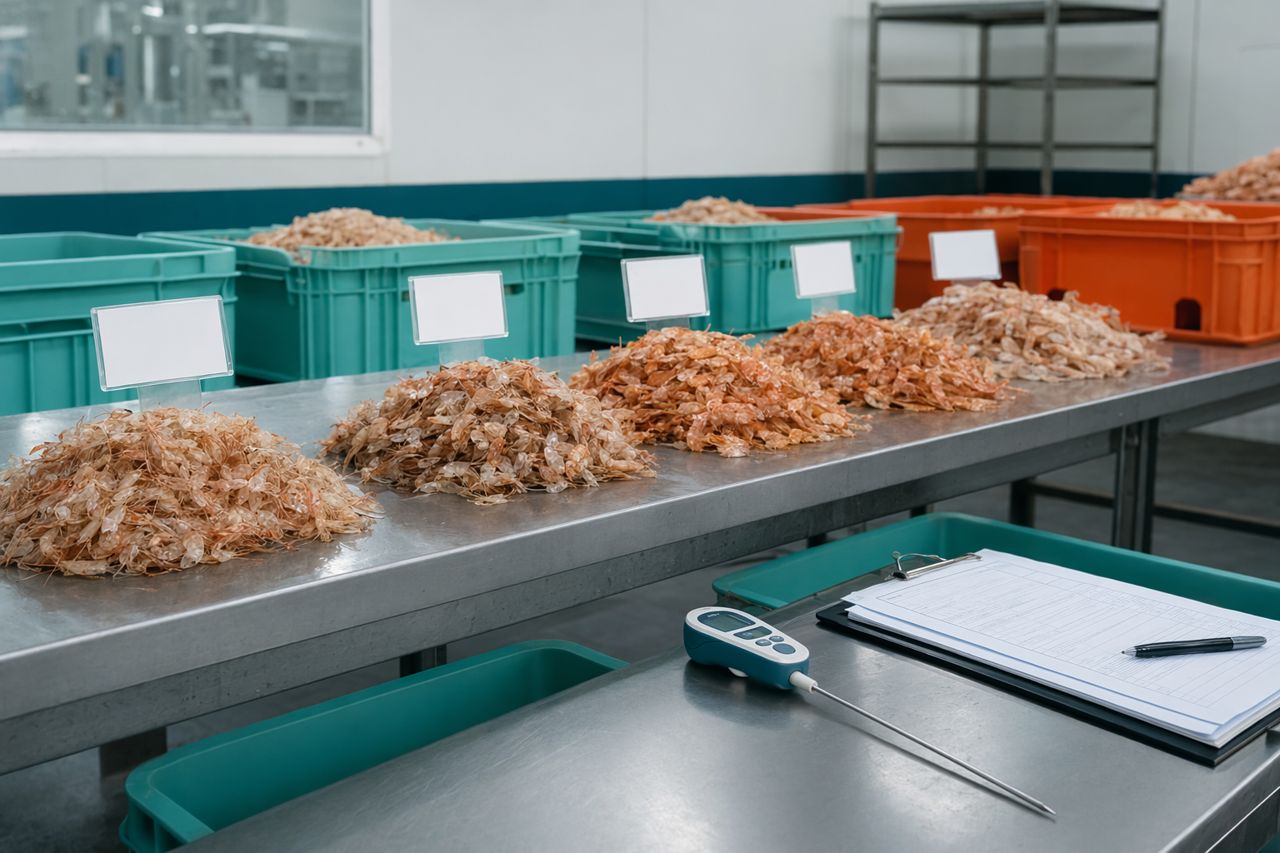
Set a simple inspection routine for odor, temperature, visual contamination, shell composition, liquid level, and lot identity. This gives operators a common language before a load enters the process.
Pretreatment alignment
Size reduction, washing, dewatering, and slurry preparation should match the enzyme process. Poor pretreatment can limit protein release and slow downstream separation.
Trial plan discipline
A meaningful enzyme trial should compare controlled shell lots, not random feedstock. Use defined shell sources and record handling conditions so performance data can be trusted.
Common supply chain mistakes
Shrimp shell chitin projects often lose efficiency because of avoidable handling mistakes.
- Treating shells as waste until the extraction line starts
- Accepting loads with unknown holding time
- Mixing fresh and degraded shells in the same batch
- Ignoring excess residual meat and soft tissue
- Allowing plastic or packaging contamination into shell bins
- Designing enzyme trials without feedstock traceability
- Using one process setting for every species mix and shell condition
- Underestimating odor control during transport and receiving
Correcting these issues usually improves the entire plant, not just the enzyme step.
The commercial case for a cleaner shell stream
A more disciplined shell supply chain can improve the chitin business case in several ways.
- Higher usable feedstock recovery from collected shells
- More consistent deproteinization outcomes
- Lower corrective chemical demand
- Reduced odor complaints around receiving and processing
- Better scheduling confidence for tanks, presses, washers, and dryers
- Stronger documentation for downstream chitin buyers
- Lower risk during scale-up from trial to production
The best chitin operations are built on practical control points. Fresh shells, predictable logistics, disciplined receiving, and the right enzyme system work together.
Build the shell supply chain around the chitin product
Shrimp processors already have the raw material. The opportunity is to handle that material as a production input from the moment it leaves the peeling line.
If your plant is planning enzyme-assisted chitin extraction, reviewing supplier options, or trying to stabilize deproteinization performance across variable shell lots, Carapax Flow can help define the enzyme and process support package around your operating reality.
Request a quote through the on-site contact form to discuss shell source, plant capacity, current process design, and the enzyme supply requirements for your chitin extraction line.