How Shrimp Shell Plants Turn Waste Into Chitin, Chitosan, Protein, and Minerals
Shrimp shell is not a disposal problem when the plant has the right separation strategy. It is a wet, variable, protein-rich marine raw material that can be converted into several saleable streams: chitin, chitosan, protein hydrolysate, pigments, calcium-rich minerals, and process water value recovery.
For plant managers, the question is not whether shrimp shell contains value. The question is how to extract that value without losing control of throughput, odor, chemical cost, batch consistency, and downstream quality.
Carapax Flow supports shrimp shell processors with enzyme-assisted deproteinization systems built for industrial chitin extraction. As an enzyme supplier for chitin extraction, we focus on practical plant outcomes: cleaner chitin, reduced caustic load, improved protein release, tighter batch-to-batch control, and a supplier relationship that can support repeat production.
The shrimp shell valorization map
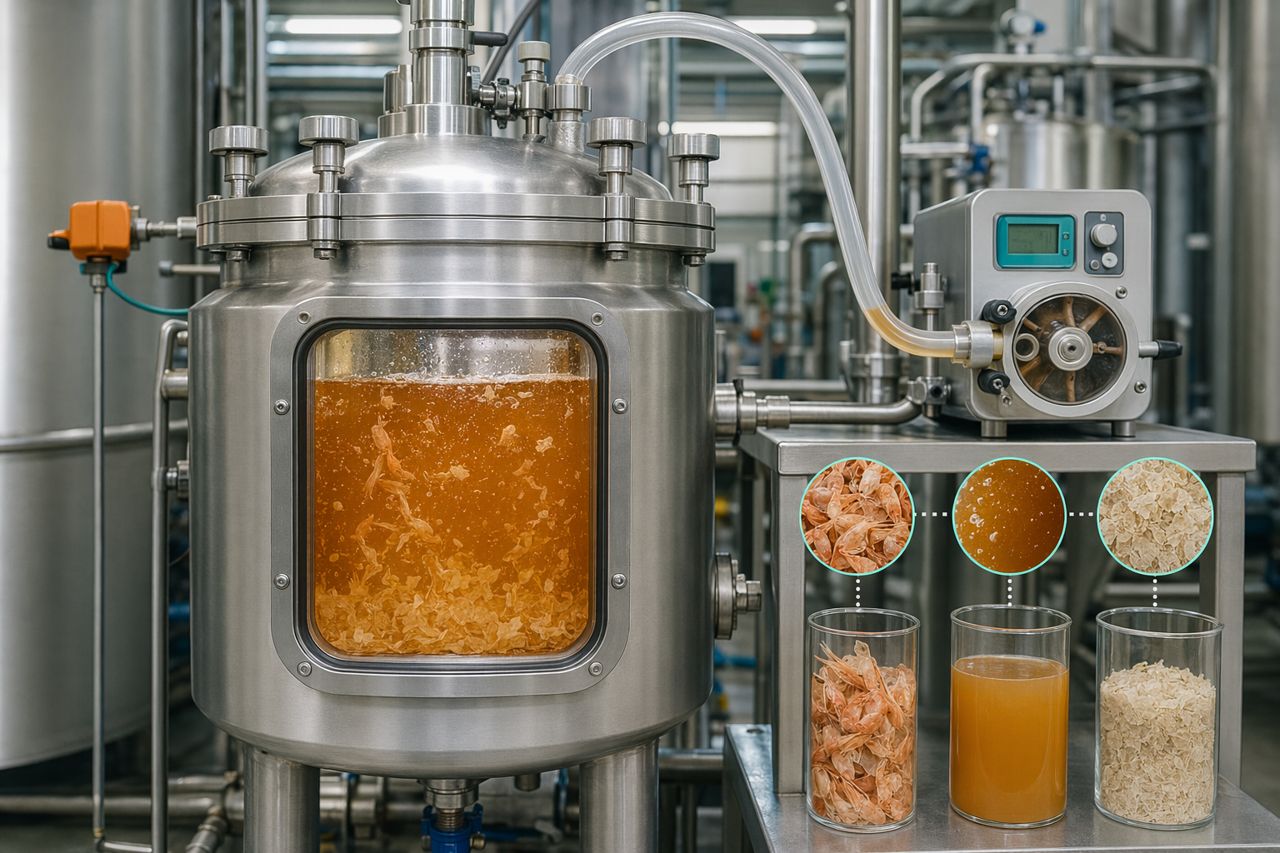
A shrimp shell valorization line usually separates the raw material into four major value zones:
-
Chitin-rich structural fraction
The shell matrix contains chitin bound with protein, minerals, lipids, pigments, and residual tissue. Deproteinization and demineralization determine how clean and consistent the final chitin becomes.
-
Protein fraction
Enzyme-assisted processing can release protein into a liquid phase that may be concentrated or refined for feed, fertilizer, fermentation nutrition, or other industrial outlets depending on local regulations and customer specifications.
-
Mineral fraction
Calcium carbonate and other minerals can be removed and recovered or managed as a controlled side stream. Better separation improves the predictability of both chitin and mineral handling.
-
Pigment and lipid fraction
Astaxanthin-bearing material and residual lipids can create value in some operations, but they also affect odor, color, oxidation, and wastewater load if not controlled.
The strongest plants do not treat these streams as waste afterthoughts. They design the process so each fraction has a defined quality target, handling route, and economic role.
Why shell composition makes processing difficult
Shrimp shell is not uniform. It changes with species, season, peel type, cooking history, storage time, salt level, and contamination from meat residues. A line receiving fresh peel waste in the morning may behave differently from a line processing chilled or frozen shell later in the week.
Common plant-level problems include:
- Variable protein removal, causing inconsistent chitin purity
- High odor load, especially when shell waits before processing
- Excess caustic demand, increasing cost and wastewater burden
- Slow filtration or washing, reducing daily throughput
- Dark or inconsistent chitin color, limiting downstream use
- High suspended solids in liquor, complicating protein recovery
- Batch drift, where the same recipe performs differently across raw material lots
This is where enzyme selection, dosing strategy, raw material preparation, and process timing become critical.
Where enzymes fit in chitin extraction
Traditional chitin extraction often relies heavily on alkaline deproteinization and acid demineralization. These tools are effective, but they can create operational pressure: chemical consumption, heat load, wastewater salinity, safety handling, and possible damage to the chitin structure when conditions are too aggressive.
Enzyme-assisted deproteinization gives the plant another control lever. Protease systems help loosen and release proteins from the shell matrix before or alongside reduced chemical treatment. The goal is not to make the plant more complicated. The goal is to make the separation more controllable.
In practice, enzymes can support:
- Improved protein release from shell-bound material
- Lower caustic intensity in the deproteinization step
- Better chitin flake integrity for downstream conversion
- More consistent residual protein targets across variable shell lots
- Lower odor development through faster stabilization and controlled hydrolysis
- A protein-rich liquor stream that is easier to route toward value recovery
The best enzyme program is not selected from a generic catalog. It is matched to the plant’s shell input, equipment, residence time, temperature profile, washing capacity, and target chitin specification.
A practical process flow for shell valorization
Every plant is different, but the operating logic usually follows a sequence like this.
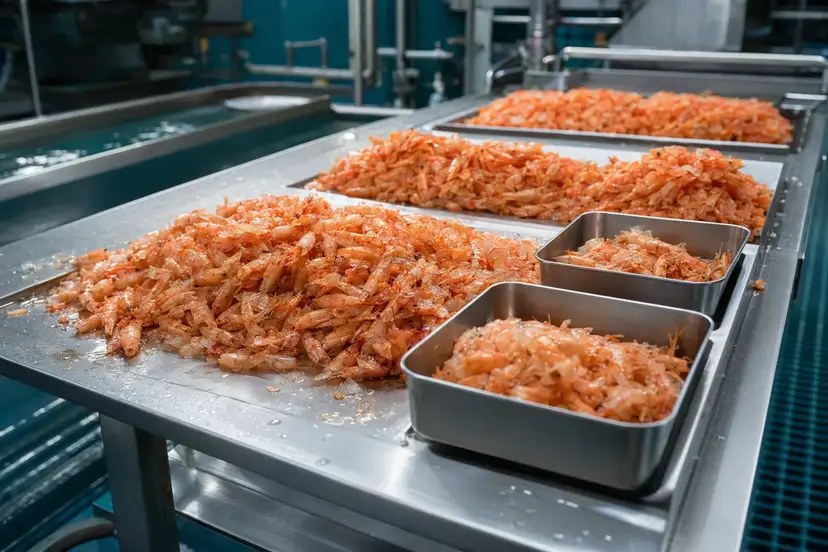
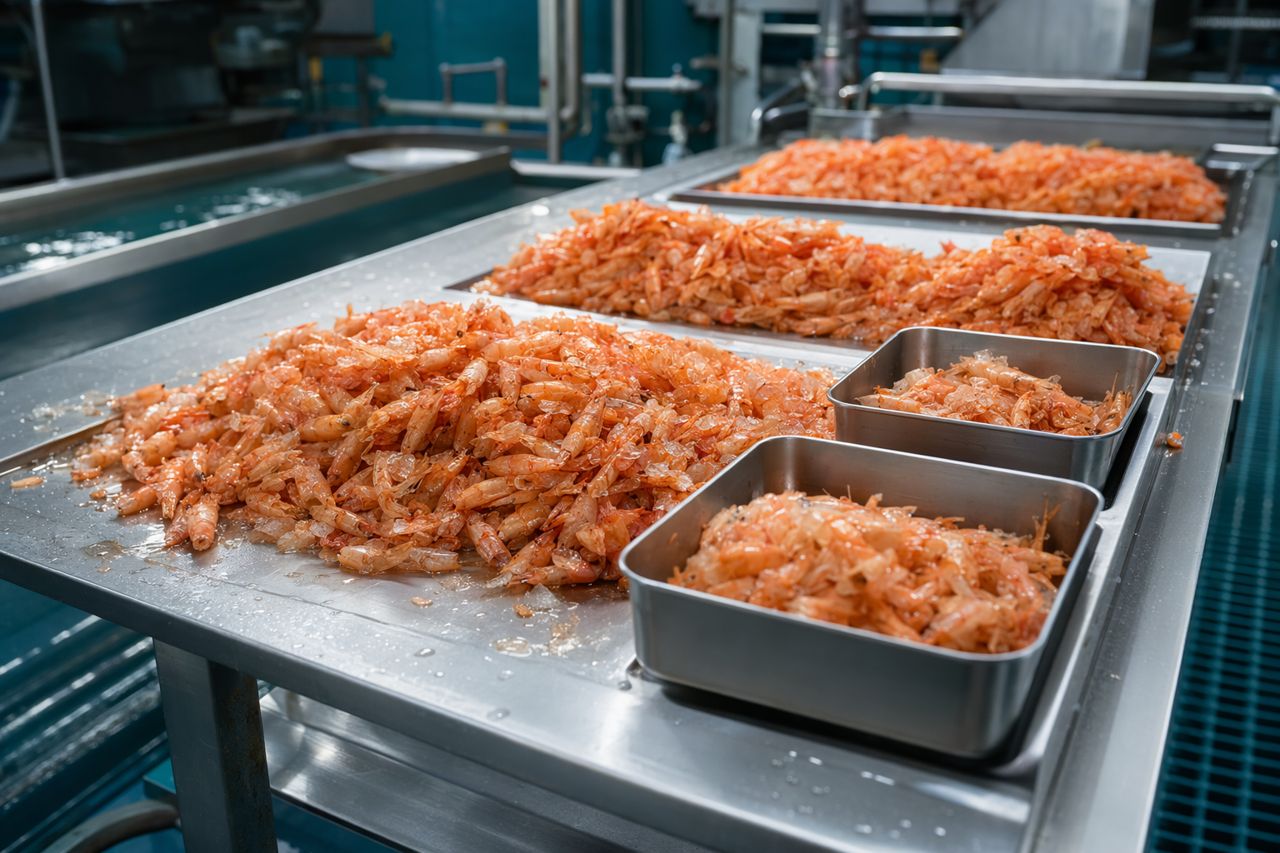
1. Raw shell receiving and stabilization
Freshness matters. Shell with high residual meat load can deteriorate quickly, increasing odor and reducing downstream control. Plants that measure incoming shell condition and minimize holding time generally run more predictable batches.
Key operational checks:
- Time from peeling to processing
- Salt and brine carryover
- Shell-to-meat residue level
- Foreign material and sand load
- Temperature during storage
- Odor condition at receiving
2. Size reduction and washing
Controlled particle size improves contact between shell and process liquid. Over-milling can create fines that slow separation. Under-sizing can leave dense fragments that deproteinize unevenly.
Good washing removes soluble contaminants while protecting recoverable solids. It also helps stabilize the process before enzyme treatment.
3. Enzyme-assisted deproteinization
This is the main point where Carapax Flow supports the line. Enzyme treatment helps release shell-bound protein into the liquid phase, improving separation before stronger chemical steps are applied.
Plant managers should focus on:
- Protein release rate under real batch conditions
- Shell integrity after treatment
- Liquor clarity and solids handling
- Odor behavior during the hold
- Repeatability between shell lots
- Compatibility with existing tanks, agitators, pumps, and wash stages
No two shell plants have identical constraints. Some need maximum chitin cleanliness. Others need a better protein co-product. Some need to reduce chemical load because wastewater capacity is the bottleneck. The enzyme program should match the bottleneck.
4. Demineralization
Demineralization removes calcium-rich material to expose a cleaner chitin fraction. If protein has already been loosened effectively, mineral removal can become more predictable because the shell matrix has been partially opened.
The objective is a consistent ash profile without excessive damage to the chitin structure.
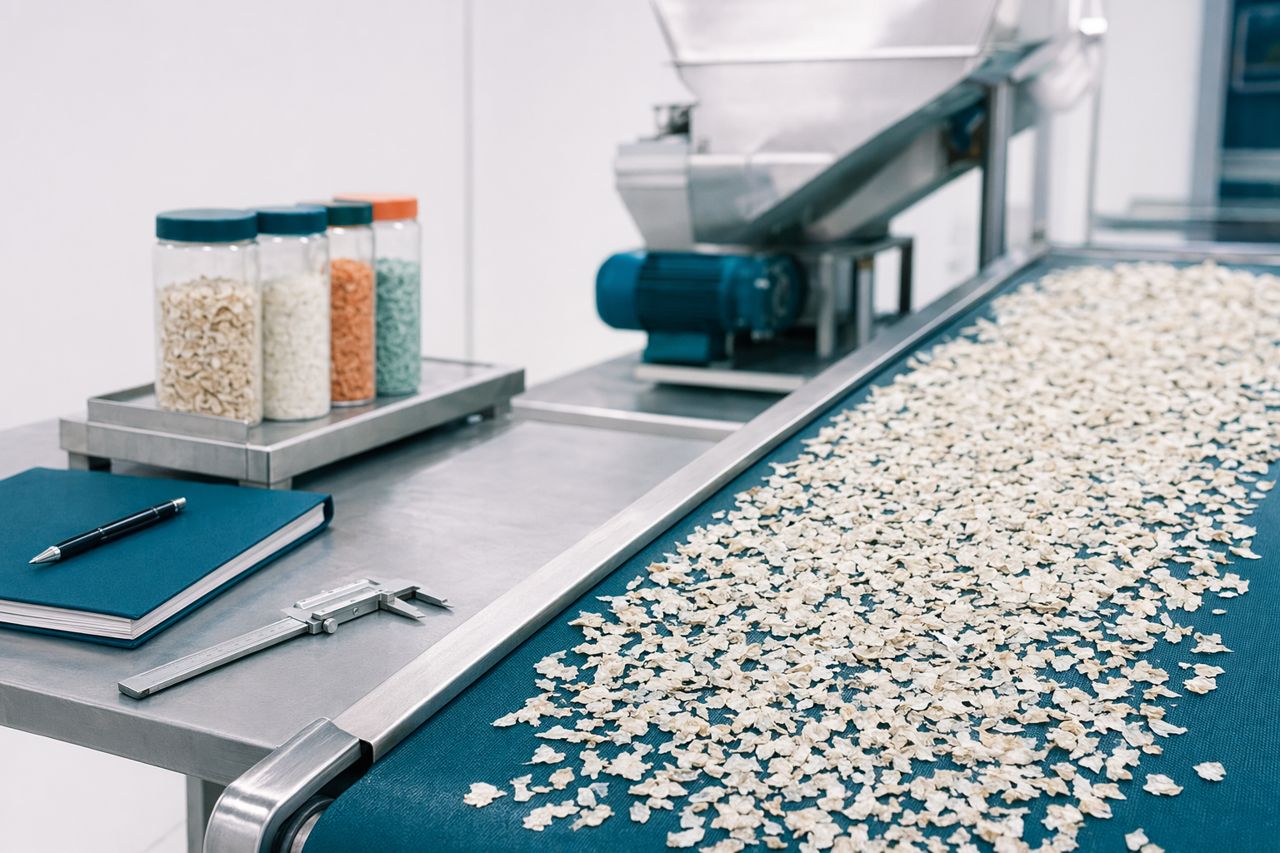
5. Chitin washing, dewatering, and drying
Once the chitin fraction is separated, washing and drying determine final handling quality. Poor washing can leave salts, odor, or process residues. Overheating during drying can affect color and downstream performance.
Chitin buyers typically care about consistency as much as headline purity. Stable color, odor, moisture, ash, and residual protein make the material easier to qualify and reorder.
6. Optional chitosan conversion
Chitosan production requires further conversion of chitin. Plants moving into chitosan need tighter control of input chitin quality because impurities and variability can carry through into viscosity, solubility, color, and application performance.
A cleaner chitin base gives the chitosan line a better starting point.
Turning protein liquor into a managed co-product
Protein released during enzyme-assisted processing should not be viewed only as a wastewater burden. Depending on plant design and market access, it can become a managed stream for animal nutrition, fertilizer, fermentation nutrients, or other industrial uses.
A useful protein stream depends on operational discipline:
- Controlled hydrolysis profile
- Low grit and shell fines
- Predictable solids level
- Managed odor and oxidation
- Fit-for-purpose concentration or stabilization
- Compliance with local feed, fertilizer, and waste regulations
Even when the protein fraction is not sold as a premium product, better separation can reduce wastewater load and improve treatment stability.
The mineral stream matters too
Mineral removal is often treated as a technical necessity, but mineral handling affects plant cost. A calcium-rich stream can influence neutralization demand, sludge volume, solids transport, and disposal economics.
Plants should evaluate:
- Mineral recovery or disposal route
- Acid consumption and neutralization cost
- Solids settling behavior
- Filtration load
- Impact on wastewater treatment
- Local options for agricultural or industrial reuse
A valorization map is only complete when minerals have a defined destination.
Operational indicators that show the process is working
A shell valorization process should be judged by practical plant performance, not by laboratory promise alone.
Useful indicators include:
- Residual protein trend in chitin
- Ash trend after demineralization
- Chitin color and odor consistency
- Batch cycle time
- Chemical consumption per finished output
- Wash water demand
- Filtration and dewatering rate
- Protein liquor solids profile
- Wastewater load and odor complaints
- Rework or rejected batches
When these indicators move in the right direction together, the plant is not just extracting chitin. It is operating a controlled valorization system.
What to ask an enzyme supplier for chitin extraction
A reliable supplier should understand the realities of wet shell processing, not just enzyme chemistry. Before committing to a program, ask for support around your actual process constraints.
Important questions include:
- Can the enzyme system handle our shell variability?
- How does it perform with cooked, chilled, brined, or mixed shell?
- What changes are needed in residence time, temperature, or mixing?
- Can it reduce our caustic load without compromising chitin quality?
- What happens to odor during the enzyme stage?
- Will the protein liquor be easier to separate and manage?
- How will performance be monitored batch by batch?
- Can supply be scaled and delivered reliably for continuous production?
Carapax Flow works with shrimp shell processors to align enzyme selection with plant throughput, target deproteinization performance, and downstream value recovery.
The commercial case: less waste, more controlled output
Shrimp shell valorization works best when the plant stops thinking in a single-product frame. Chitin may be the main product, but the economic result is shaped by all fractions: chitin yield, protein handling, mineral control, water use, odor reduction, chemical load, and batch reliability.
A stronger process can deliver value through:
- Higher usable chitin recovery
- More consistent chitin quality for repeat customers
- Reduced chemical pressure in deproteinization
- Lower odor risk around receiving and processing
- Better use of protein-rich side streams
- Improved wastewater predictability
- More stable production planning
- Fewer off-spec batches and rework events
For a shrimp shell processing plant, the goal is not novelty. The goal is a repeatable industrial route from wet shell to qualified materials.
Build your shell valorization plan with Carapax Flow
If your plant is evaluating enzyme-assisted chitin extraction, Carapax Flow can help review your shell input, current process flow, deproteinization targets, chemical constraints, and co-product goals.
We support practical plant trials, scale-up planning, and supply continuity for shrimp shell processing operations.
Request a quote through our on-site form to discuss your raw shell profile, target chitin specification, and production volume.