Centrifuges, Filter Presses, and Screens in Chitin Extraction Plants
Solid-liquid separation is where a chitin extraction line either protects yield or gives it away. After enzymatic deproteinization, shrimp shell solids carry released protein, soluble organics, fines, brine, and process liquor. The separation train determines how much chitin stays in the plant, how clean the intermediate flakes become, how fast tanks can turn, and how manageable the odor load remains.
For plant managers evaluating an enzyme supplier for chitin extraction, the enzyme is only part of the operating result. The right enzyme program should release protein efficiently while keeping solids separable, rinseable, and consistent across batches. If deproteinization creates unstable slurry, excessive fines, or heavy carryover, downstream equipment absorbs the cost.
This guide looks at the practical roles of screens, centrifuges, and filter presses in shrimp shell processing plants using enzymatic chitin extraction.
Why separation performance matters after enzymatic deproteinization
In a conventional chemical-heavy process, separation is often forced by aggressive chemistry and repeated washing. In an enzyme-assisted process, the goal is different: controlled protein release with lower chemical load, less harsh handling, and better preservation of chitin quality.
That changes the job of the separation system. It must:
- Remove protein-rich liquor without losing usable shell solids
- Reduce soluble carryover before downstream mineral removal or finishing steps
- Control odors by moving organic-rich liquor out of the solids stream quickly
- Maintain steady throughput across variable shell feedstock
- Prevent fines from overloading wastewater or polishing stages
- Produce a predictable wet cake or washed solid fraction for the next unit operation
Good separation is not just mechanical performance. It is process coordination between enzyme action, residence time, slurry solids, agitation, temperature control, wash strategy, and equipment selection.
The separation sequence: not one machine, but a train
Most chitin extraction plants do not rely on a single separation device. A practical system often combines coarse screening, centrifugal clarification or dewatering, and press-based cake formation depending on product target and plant layout.
A simplified enzyme-assisted flow may look like this:
- Shrimp shells are size-reduced or conditioned
- Enzymatic deproteinization occurs in stainless tanks
- Coarse solids are screened from protein-rich liquor
- Solids are washed to remove soluble protein and salts
- Centrifuges or presses reduce moisture and liquor carryover
- Chitin-rich solids move to the next extraction or finishing stage
- Liquor is routed for recovery, treatment, or disposal management
Each handoff matters. A screen that blinds too quickly slows tank turnover. A centrifuge that shears fragile solids can increase fines. A filter press that receives poorly conditioned slurry may cycle slowly and produce inconsistent cake release.
Screens: first defense against solids loss and downstream overload
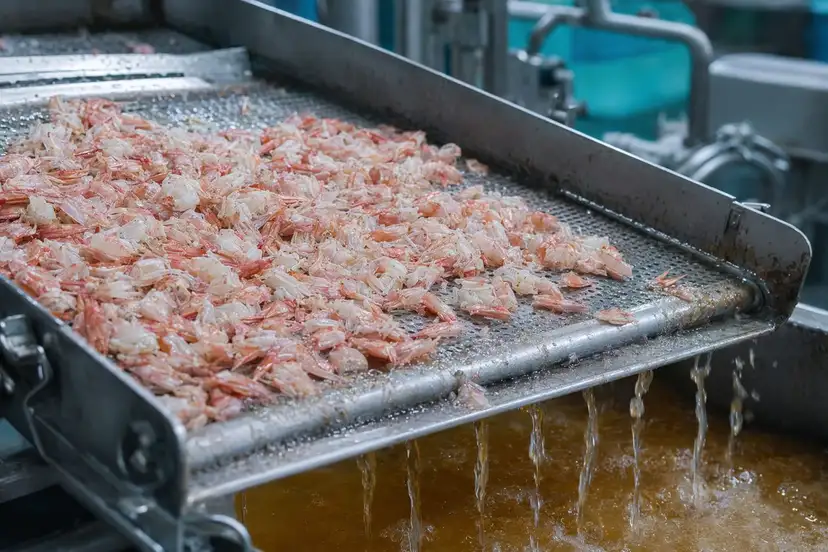
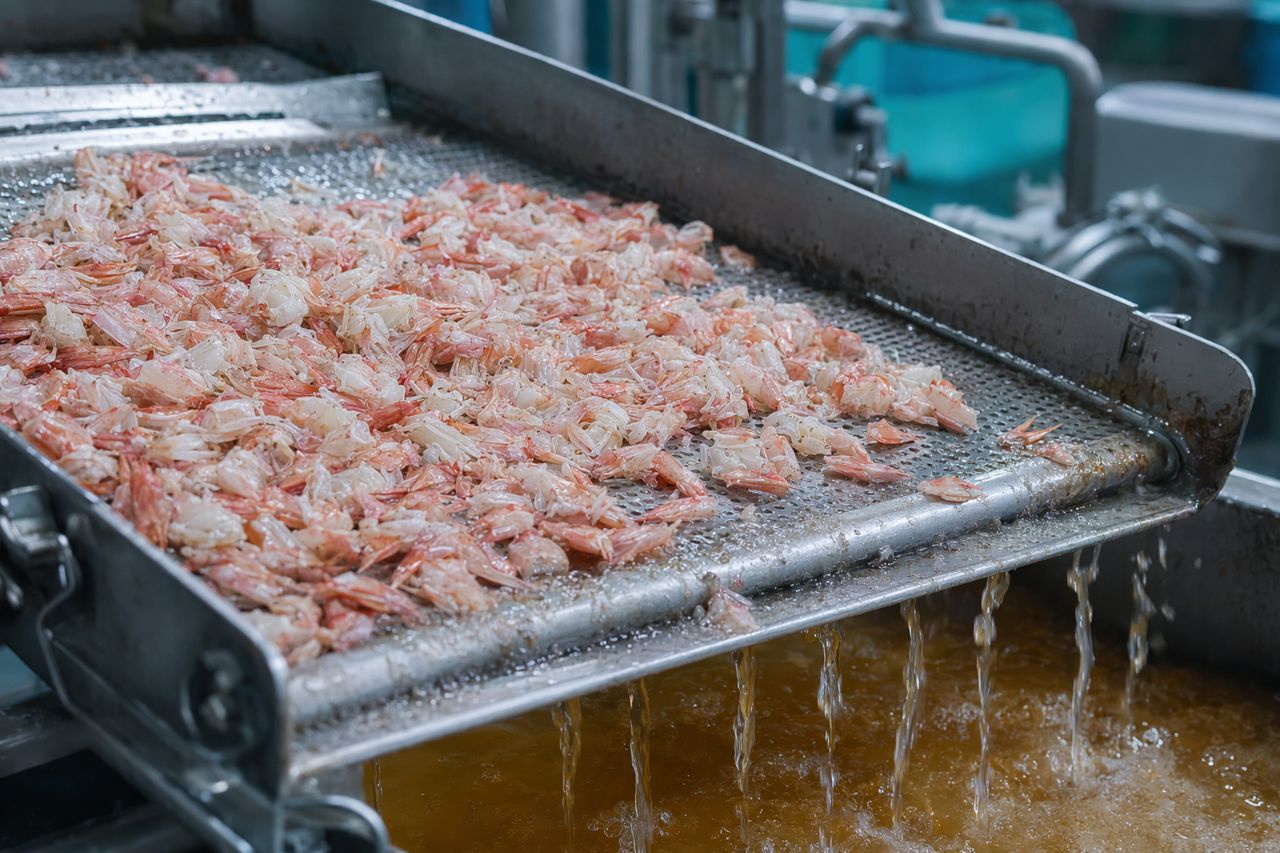
Screens are usually the first separation checkpoint after enzymatic treatment. Their job is simple but critical: retain shell-derived solids while allowing released protein liquor to pass.
Where screens work best
Screens are effective when the plant needs:
- Fast removal of coarse flakes from process liquor
- Protection for pumps, centrifuges, and downstream valves
- Early reduction of organic liquid load around the solids
- A low-complexity separation step before washing
- Better control of large fragment distribution before dewatering
Operational watchpoints
Screen performance depends on slurry behavior. Enzymatic protein release can improve separation by loosening attached protein, but poor control can create sticky films, emulsified liquor, or excessive fines.
Plant teams should monitor:
- Screen blinding during high-protein batches
- Carryover of fine chitin solids into liquor streams
- Uneven feed distribution across the screen deck
- Wash water placement and spray effectiveness
- Odor buildup around retained wet solids
Enzyme program impact
A well-matched enzyme program helps detach protein without turning the shell fraction into a difficult sludge. For separation, that means cleaner liquor drainage, reduced repeated washing, and more predictable screen loading.
Centrifuges: throughput, liquor removal, and fines management
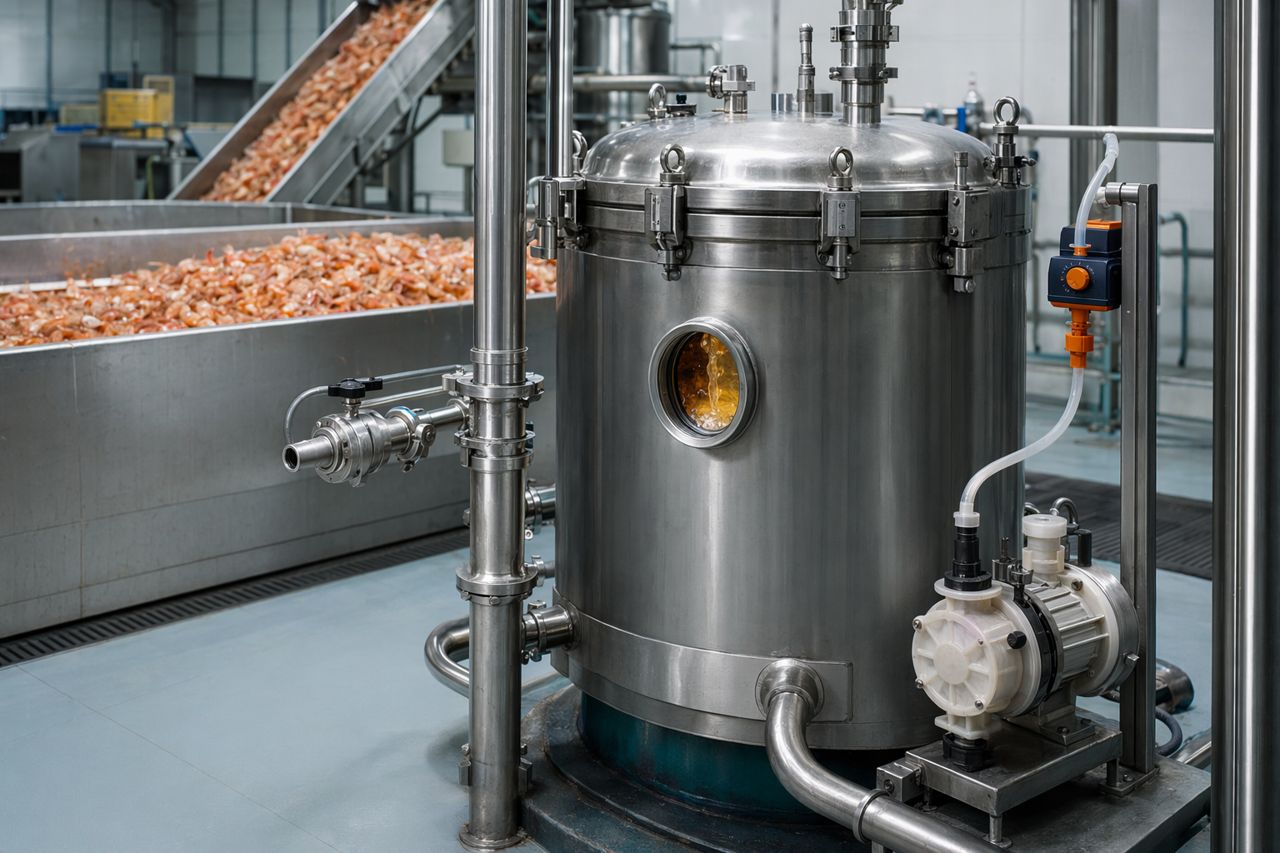
Centrifuges are often used when plants need continuous or semi-continuous removal of liquid from chitin-rich solids. They can improve tank availability, reduce manual handling, and support higher throughput when feed conditions are stable.
Where centrifuges fit
Centrifuges are useful for:
- Separating suspended solids from protein-rich liquor
- Reducing moisture before further processing
- Handling higher-volume lines with predictable feed
- Recovering fine solids that would otherwise leave with liquor
- Improving process flow between extraction and washing stages
Key operational variables
Even without changing equipment, centrifuge output can vary sharply based on upstream conditions. Important variables include:
- Solids concentration entering the centrifuge
- Fragment size and fines load
- Liquor viscosity after protein release
- Fat and pigment carryover from shell feedstock
- Feed surge control from extraction tanks
- Cleaning frequency and bowl condition
Avoiding hidden yield losses
The main risk is not only wet cake. It is chitin-rich fines leaving with the centrate or being diverted into waste handling. For plants focused on yield, fines recovery should be included in the process balance, not treated as a wastewater issue after the fact.
An enzyme supplier for chitin extraction should understand how deproteinization conditions influence centrifuge behavior. If an enzyme program increases protein release but also increases difficult-to-capture fines, the plant may gain in reaction performance and lose in separation efficiency.
Filter presses: cake formation and controlled dewatering
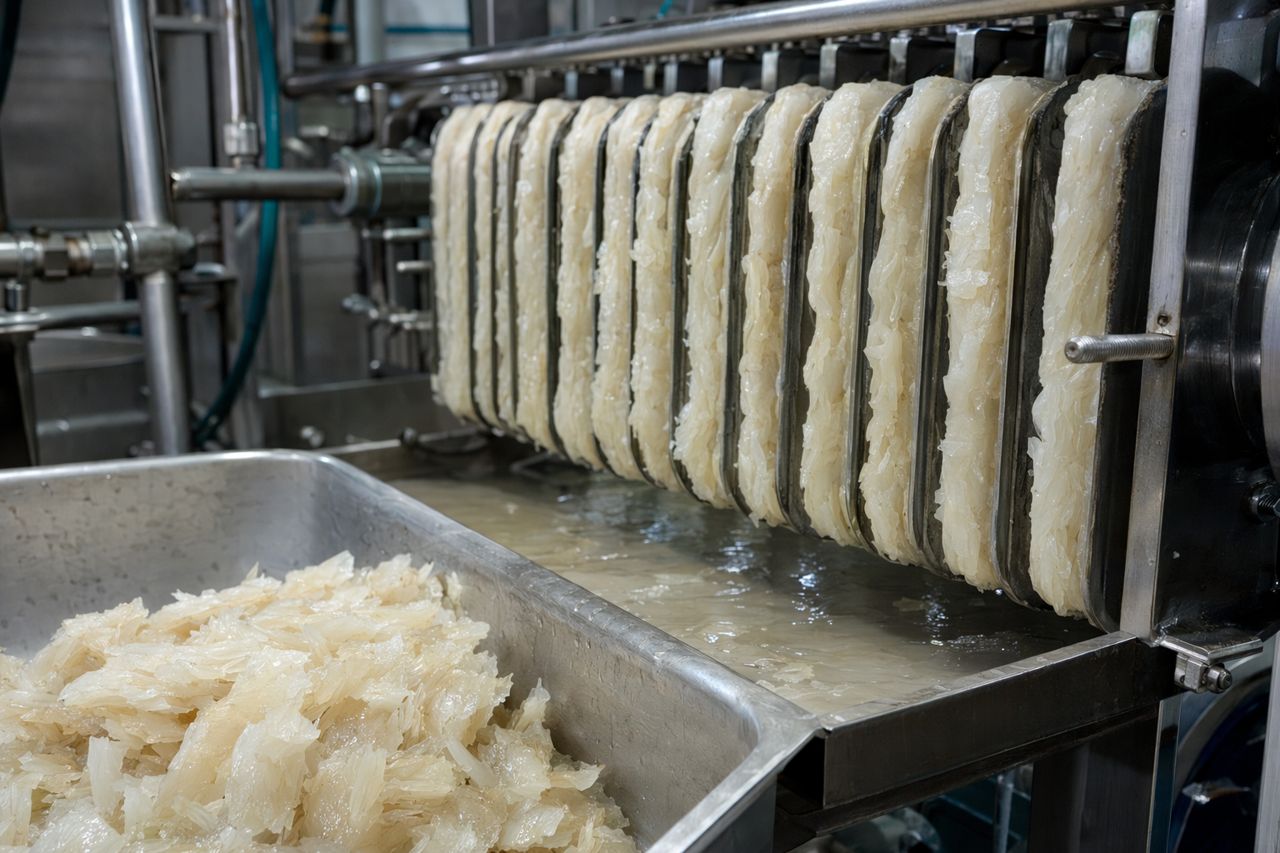
Filter presses are valued when plants need a defined cake, strong liquor removal, or batch-based control. They can be especially useful where downstream handling benefits from a stackable or washable chitin-rich solid fraction.
Where filter presses perform well
A filter press can support:
- Clear separation between liquor and solids
- Controlled washing through the cake
- Moisture reduction before transfer or drying
- Batch traceability and inspection
- Lower suspended solids in filtrate when properly conditioned
Practical constraints
Filter presses require attention to cycle time. A press that produces good cake but takes too long may become the bottleneck. Common constraints include:
- Slow filling from inconsistent slurry
- Poor cake release from sticky protein carryover
- Cloth blinding from fats, pigments, and fines
- Variable cake thickness from uneven feed
- Labor demand during cleaning and discharge
Enzymatic extraction and cake quality
Enzyme-assisted deproteinization can improve cake behavior when protein is released cleanly and the remaining chitin-rich solids retain structure. The best outcome is a cake that drains predictably, washes efficiently, and releases without excessive scraping or rework.
Choosing between screens, centrifuges, and filter presses
The right separation strategy depends on plant goals. Most facilities need a combination rather than a single answer.
If the priority is throughput
Consider front-end screening plus centrifugation. This arrangement can keep extraction tanks moving and reduce liquid load quickly, provided fines are controlled.
If the priority is cake consistency
Consider a filter press after screening and washing. This can provide a defined intermediate for downstream operations, especially in batch-oriented plants.
If the priority is odor control
Focus on fast removal of protein-rich liquor and minimized dwell time for warm wet solids. Screens and centrifuges can help reduce stagnant organic load when integrated with enclosed transfer and timely washing.
If the priority is yield protection
Track solids in every liquid stream. Yield losses often hide in centrate, filtrate, screen underflow, and wash discharge. Separation efficiency should be measured as recovered chitin-rich mass, not simply visual clarity.
Process conditions that make separation easier
Mechanical separation improves when enzymatic treatment is controlled upstream. Carapax Flow focuses on enzyme programs that support practical plant behavior, not only laboratory conversion.
Important operating factors include:
- Consistent shell preparation and particle distribution
- Stable temperature control during deproteinization
- Controlled residence time to avoid under-release or over-processing
- Mixing that contacts shell surfaces without excessive breakage
- Timely separation after protein release
- Wash sequencing that removes soluble load without diluting the whole plant
- Compatibility with existing stainless tanks, pumps, screens, and presses
When these factors are aligned, plants can reduce chemical intensity, improve batch repeatability, and keep separation equipment inside its reliable operating window.
What to discuss with an enzyme supplier before changing the line
Before selecting or modifying separation equipment, plant teams should review the enzyme program and separation target together. Useful questions include:
- What shell feedstock variability does the enzyme program tolerate?
- Does protein release produce a drainable slurry or a sticky suspension?
- How does the process affect fines generation?
- Can existing screens handle the treated solids without frequent blinding?
- Is the wet cake suitable for the next step without excessive washing?
- How quickly should liquor be removed to manage odor and organic load?
- What plant data should be tracked during a production trial?
A reliable enzyme supplier for chitin extraction should be able to support plant trials around separation performance, not just supply a product name. The commercial value is proven in recovered solids, tank turnover, lower chemical demand, wastewater load, and consistent output.
Practical trial metrics for plant managers
For production trials, keep the measurement set operational and decision-ready.
Recommended trial metrics:
- Treated shell mass entering separation
- Recovered wet solids after each separation step
- Moisture trend of separated solids
- Visible protein carryover after washing
- Filtrate or centrate solids loss trend
- Screen cleaning frequency
- Centrifuge or press cycle stability
- Odor intensity around holding and discharge points
- Downstream chemical consumption
- Batch-to-batch variation in final chitin-rich intermediate
The purpose is not to create a lab report. The purpose is to decide whether the enzyme and separation system together improve plant economics.
Carapax Flow approach
Carapax Flow supplies enzyme solutions for shrimp shell processors that need practical deproteinization performance with dependable plant support. We help plants evaluate how enzyme selection affects separation, washing, odor control, and batch consistency.
Our work is focused on industrial realities:
- Shrimp shell variability by season and source
- Existing stainless equipment and limited shutdown windows
- Throughput pressure during landing peaks
- Lower chemical load targets
- Consistent chitin-rich solids for downstream processing
- Supplier reliability and documentation for B2B procurement
If your plant is reviewing screens, centrifuges, filter presses, or a full enzyme-assisted extraction line, the enzyme program should be part of the separation conversation from the start.
Request a quote
Tell us about your shrimp shell feedstock, current extraction route, separation equipment, and throughput target. Carapax Flow can recommend an enzyme solution and trial plan aligned with your plant conditions.
Request a quote